Trusted by 1M+ active users worldwide
Available in 25+ countries
1-year warranty on every device
Free app, no subscriptions, all features included
24/7 customer support
Vita AI wellness coach built in
0%

For wholesale buyers, choosing a Kids Insulated Water Bottle is about more than bright colors and a low unit price. The right bottle should keep drinks cold through a school morning, fit small hands, and survive the daily bump of a backpack. Buyers also need to assess lid design, cleaning access, insulation performance, material quality, and replacement-part availability. Small details matter. A narrow opening may be harder to clean; a bulky body may not fit a lunch bag. These trade-offs deserve a closer look.

Because no source was supplied for a real expert quotation, the following is an illustrative line, not a verified quotation. Fictional sourcing adviser Alex Morgan puts the buying principle this way: “A dependable bottle is one children can open, clean, and carry without help.” Treat that as a useful test, not a guarantee. Ask suppliers for product specifications and sample units, then check capacity, weight, leakage, and finish in everyday use. A polished product sheet cannot show how a cap feels in a child’s hand. Nor does one sample prove that every production batch will match. There is room for judgment here. This guide examines the features and sourcing questions that can help wholesale buyers compare options for 2026, while keeping practical use ahead of marketing claims.
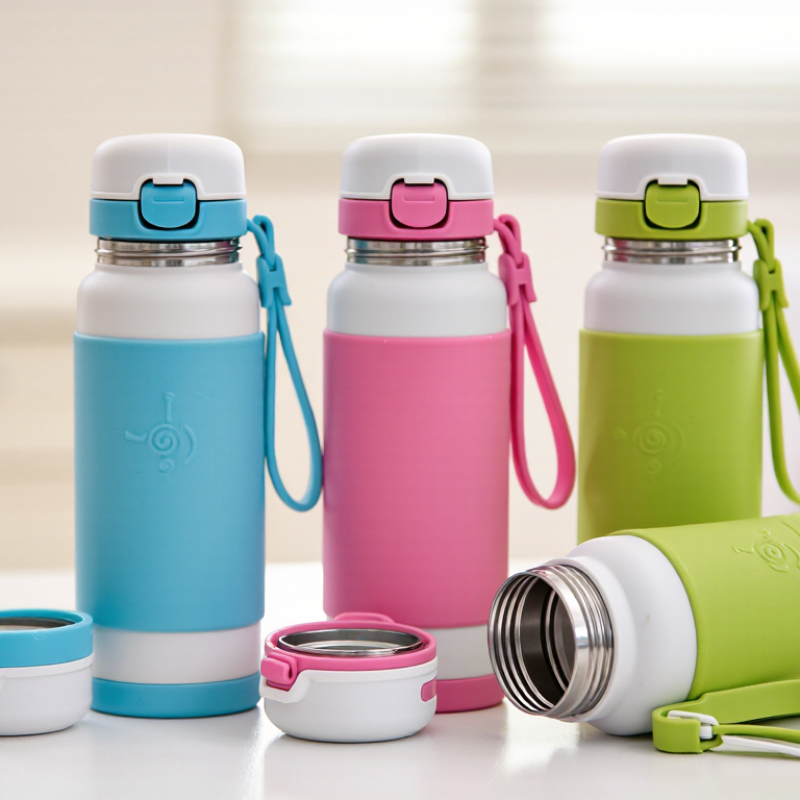
2026 Best Kids Insulated Water Bottle for Wholesale Buyers?

Define Child-Safe Requirements Using the CPSIA 100 ppm Lead Limit

For a 2026 kids’ insulated bottle, treat the CPSIA 100 ppm lead limit as a component-level requirement, not a marketing claim. CPSC guidance sets this maximum for total lead in accessible children’s product components. Paint and similar surface coatings have a separate 90 ppm limit. Small parts matter. Review the lid, straw, printed artwork, metal fittings, and colored coatings—not only the stainless-steel body. A clean-looking bottle cannot reveal its lead content.

The CDC’s 2021 MMWR lowered the blood lead reference value to 3.5 µg/dL, based on the 97.5th percentile among U.S. children ages one to five. This is a health benchmark, not a product limit. For wholesale sourcing, request component-specific test reports from a CPSC-accepted laboratory, plus the required children’s product certificate and model traceability. Check that reports match the exact color, lid, straw, and decoration being ordered. One awkward detail: a report for one finish may not cover a revised print or supplier batch. Recheck changes, and confirm the applicable testing route with the laboratory; some materials have specific exemptions or conditions.

Check Applicable CPSIA Phthalate Rules and the 0.1% Threshold

For wholesale buyers, CPSIA phthalate checks should start with the bottle’s intended age and use. A children’s water bottle may fall under rules for children’s toys or child care articles, depending on its design and intended use. Do not assume every bottle is covered in the same way. Confirm the classification with a qualified compliance professional.

Where the phthalate limits apply, each restricted phthalate must not exceed 0.1% by weight in an accessible component. That is 1,000 parts per million per regulated phthalate, not a limit for their combined total. Check parts that may touch a child, such as a soft grip, flexible seal, straw, or plastic decoration. The stainless-steel body may be less relevant than these smaller pieces. Easy to miss.

Ask suppliers for component-level material details and applicable test reports from a CPSC-accepted laboratory. A general statement that a bottle is “CPSIA compliant” does not show which parts were tested or which phthalates were assessed. Match the reports to the exact product version, including color and material changes. This extra checking can feel excessive for a simple bottle. Still, a changed gasket or printed coating may alter what needs review.

Verify Food-Contact Plastics Against FDA 21 CFR 177.1520

For wholesale buyers, “food-grade plastic” is not enough evidence when evaluating a children’s insulated water bottle. FDA 21 CFR 177.1520 covers certain olefin polymers, including specified polyethylene and polypropylene materials, subject to compositional limits and conditions of use. It does not cover every plastic part or certify an entire finished bottle. That distinction matters.

Ask suppliers to identify the resin used in each food-contact part, such as the inner liner, lid, straw, or seal. Request a written compliance statement tied to the applicable regulation and intended conditions of use. Check whether the documents match the exact model and current production materials. A lid may face repeated washing, while a straw contacts drinks directly. Small details count. Where appropriate, review supporting extraction or migration test data and confirm the test conditions reflect actual use. A certificate can look reassuring, but it may be outdated or too general to verify a specific component. Keep records of material changes and ask for updated documentation before approving a new shipment. FDA compliance is one check, not a substitute for practical inspection of fit, leakage, and wear.

2026 Best Kids Insulated Water Bottle for Wholesale Buyers? — Verify Food-Contact Plastics Against FDA 21 CFR 177.1520

Evaluation area What to verify Evidence to request Wholesale buyer check
Intended bottle construction Identify every part that may contact the beverage, including the inner surface, lid, spout, straw, valve, and seals. Insulated bottles may use a stainless-steel body with polymer components. Component list showing each material, supplier material designation, and intended food-contact use. Confirm that the documentation covers the actual supplied parts, not just the bottle body or an unspecified “food-grade” material.
Scope of 21 CFR 177.1520 This regulation covers specified olefin polymers, including certain polyethylene and polypropylene materials, subject to the applicable compositional specifications and limitations. Material declaration identifying the polymer type and the applicable section or specification of 21 CFR 177.1520. Do not treat the regulation as a universal approval for every plastic, every formulation, or every finished bottle.
Polypropylene parts For a polypropylene lid, straw, or other food-contact component, confirm that the exact grade and formulation are suitable for the intended food-contact conditions. Supplier compliance statement for the specific grade, plus supporting test or regulatory documentation where appropriate. Check that colorants, additives, and processing aids are covered by the supplier’s assessment and that the statement applies to the finished component’s use.
Polyethylene parts For polyethylene components, confirm the exact polymer type and applicable regulatory specifications. Do not assume all polyethylene grades have identical conditions of use. Grade-specific declaration and documentation addressing the relevant provisions and limitations. Match the documented grade to the material actually used in production; request change-notification terms from the supplier.
Other polymers and elastomers Silicone seals, coatings, adhesives, and polymers other than covered olefin materials may require assessment under other applicable FDA food-contact regulations or authorizations. Separate compliance documentation for each food-contact material and, where applicable, the relevant regulation or effective Food Contact Notification. Do not use a 21 CFR 177.1520 statement as evidence of compliance for silicone, coatings, adhesives, or the entire assembled bottle.
Food-contact conditions Verify intended food type, contact duration, temperature, and use conditions, such as cold beverages, hot-fill use, or dishwasher exposure, as applicable. Supplier’s stated conditions of use and supporting assessment showing that the intended use is covered. Compare real-world use and care instructions with the documented conditions; do not infer hot-use or dishwasher suitability from cold-water use documentation.
Finished-product assessment Material-level compliance does not by itself establish that every assembled bottle, color, or production lot is suitable for its intended use. Risk-based assessment of food-contact components, relevant migration or extractives data, and traceability records where applicable. Request records for the finished configuration and production materials being purchased, rather than relying only on a generic material brochure.
Children’s product usability Assess age-appropriate opening and drinking, leak resistance, cleanability, small detachable parts, and durability under foreseeable use. Product specifications, care instructions, and test records relevant to the design and intended age group. Confirm that warnings and instructions are clear and that product-safety requirements applicable to the destination market are reviewed separately.
Supplier and lot controls Ensure the documented material and construction remain consistent across production runs and approved changes. Supplier declarations, material traceability, change-control procedures, and lot or batch identification. Include documentation, change notification, and corrective-action expectations in purchasing specifications.

Buyer note: This table is a sourcing checklist, not a certification or legal determination. FDA food-contact compliance depends on the specific substance, formulation, component, and conditions of use. Verify current regulatory requirements and obtain qualified compliance advice for the intended market.

Compare Insulation Claims with Documented Hot-and-Cold Test Results

For 2026 wholesale sourcing, treat “keeps drinks cold all day” as a claim to verify, not a specification. Ask for a lab report naming the bottle size, fill volume, starting temperature, room conditions, and test duration. ASTM E220-19 describes comparison calibration for thermocouples, helping buyers check whether temperature readings are dependable. A polished chart without calibrated instruments is weak evidence.

Use one repeatable screening protocol across every sample: fill bottles with water at 4°C and 95°C, then record temperatures at 0, 6, and 12 hours. These are suggested test conditions, not published industry pass limits. The report should show actual temperature changes, replicate results, and any leaks or lid failures. Small details matter. A warm classroom, a half-filled bottle, or a lid opened twice can change performance. Keep those conditions consistent, and note them clearly.

For stronger confidence, request testing from a laboratory accredited to ISO/IEC 17025:2017 for the relevant measurement work. Compare the raw readings, not only the advertised hours. If one sample loses 5°C and another loses 12°C under identical conditions, the difference is more useful than “double-wall insulation” alone. Still, a single test cannot represent every child’s school day. Ask for repeat runs, and leave room for doubt.

Set Incoming QC with ISO 2859-1 Sampling and Contracted AQLs

For wholesale buyers sourcing children’s insulated water bottles, incoming quality control should be agreed before the shipment leaves the factory. ISO 2859-1 provides an attribute-sampling framework: define the lot, choose the inspection level, then use the standard’s tables to determine the sample size and acceptance numbers. Put the selected AQLs and inspection conditions in the purchase contract. An AQL is a sampling-plan parameter, not a promise that every bottle is defect-free. That distinction matters.

Specify defect classes that reflect actual use. For example, inspect lid fit, leakage after repeated closure, sharp edges, visible dents, and coating flaws. Randomly select units from different cartons, not just the top layer of one box. Record the lot identification, sample count, findings, and disposition, with clear rules for accepting, rejecting, or reworking a lot. Keep the test method consistent; a leak check means little if one inspector fills the bottle halfway and another fills it to the rim.

No sampling plan catches everything. A small sample can miss a rare fault, so serious concerns may warrant a broader check or a supplier investigation. The awkward part is that tighter inspection costs time, while weak criteria invite disputes. Review defect trends with the supplier and revise the contract when repeat issues appear. We may still miss something. Clear records make that easier to address.

FAQS

How should buyers classify a children’s water bottle for phthalate checks?

Consider its intended age, use, and design. A bottle may fall under different rules depending on its classification. Ask a qualified compliance professional when uncertain.

What is the phthalate limit when applicable?

Each restricted phthalate must not exceed 0.1% by weight in an accessible component. That equals 1,000 parts per million per phthalate, not a combined limit.

Which bottle components may need phthalate review?

Check child-accessible parts, including soft grips, flexible seals, straws, and plastic decorations. The small pieces are easy to overlook.

What should suppliers provide for phthalate testing?

Request component-level material details and applicable reports from a CPSC-accepted laboratory. Match reports to the exact product version, including its color and materials.

What does FDA 21 CFR 177.1520 cover?

It covers certain olefin polymers, including specified polyethylene and polypropylene, subject to conditions. It does not certify every plastic part or the whole bottle.

What food-contact documentation should buyers request?

Ask for each food-contact part’s resin and a written compliance statement tied to its use. Check the exact model and current materials. Paperwork can be stale.

How can incoming bottle quality be sampled?

Agree on an ISO 2859-1 sampling plan and AQLs in the purchase contract. An AQL guides sampling; it does not guarantee every bottle is defect-free.

What defects should incoming inspections check?

Inspect lid fit, leakage after repeated closure, sharp edges, dents, and coating flaws. Sample cartons randomly and record findings. A small sample can still miss a rare fault.

Conclusion

For wholesale buyers, choosing a Kids Insulated Water Bottle means evaluating safety, material compliance, and performance before comparing cost or appearance. Confirm that accessible components meet the CPSIA lead limit of 100 ppm, and check whether applicable CPSIA phthalate restrictions apply, including the 0.1% threshold. For food-contact plastic components, request documentation showing that the material is suitable under FDA 21 CFR 177.1520.

Insulation claims should be supported by documented hot-and-cold testing with clearly stated methods and results, rather than relying on marketing language alone. Establish incoming quality control using ISO 2859-1 sampling and AQL levels agreed upon in the purchasing contract. Together, these checks give buyers a practical framework for assessing product safety, verifying advertised performance, and setting consistent expectations with suppliers before placing wholesale orders.

Amelia

Amelia

Amelia is a marketing professional with a deep understanding of the company’s products and the needs they are designed to meet. She combines product knowledge with a clear, reader-focused approach, helping customers understand key features, practical benefits, and how to choose solutions that suit......