Trusted by 1M+ active users worldwide
Available in 25+ countries
1-year warranty on every device
Free app, no subscriptions, all features included
24/7 customer support
Vita AI wellness coach built in
0%

Hot-weather miles reveal what a product sheet can miss. A cap may look lightweight, yet feel clammy after a steady run. For wholesale buyers, choosing a Breathable Running Cap means looking beyond color and price. Fabric, ventilation, fit, sweat control, and construction all affect whether customers will wear it again.

This guide examines practical details worth checking in 2026. Mesh panels, quick-drying fabrics, soft sweatbands, and adjustable closures can make a noticeable difference. So can stitching around the brim and the placement of ventilation openings. Small details matter. Ask suppliers for material specifications, available sizes, customization options, and sample policies. Then inspect samples and test them during actual runs, not only indoors. A cap that works for one runner may not suit every head shape or climate.

Wholesale decisions also involve trade-offs. A lighter fabric may improve airflow but feel less structured. A firmer brim may hold its shape but add weight. There is no perfect design for every buyer, and “breathable” can mean different things across product descriptions. That deserves a closer look. The sections ahead compare key features, supplier questions, and purchasing considerations to help buyers assess options with care. Use the guidance as a starting point, then confirm performance with your own team and target customers. Real wear can challenge even a polished specification sheet.
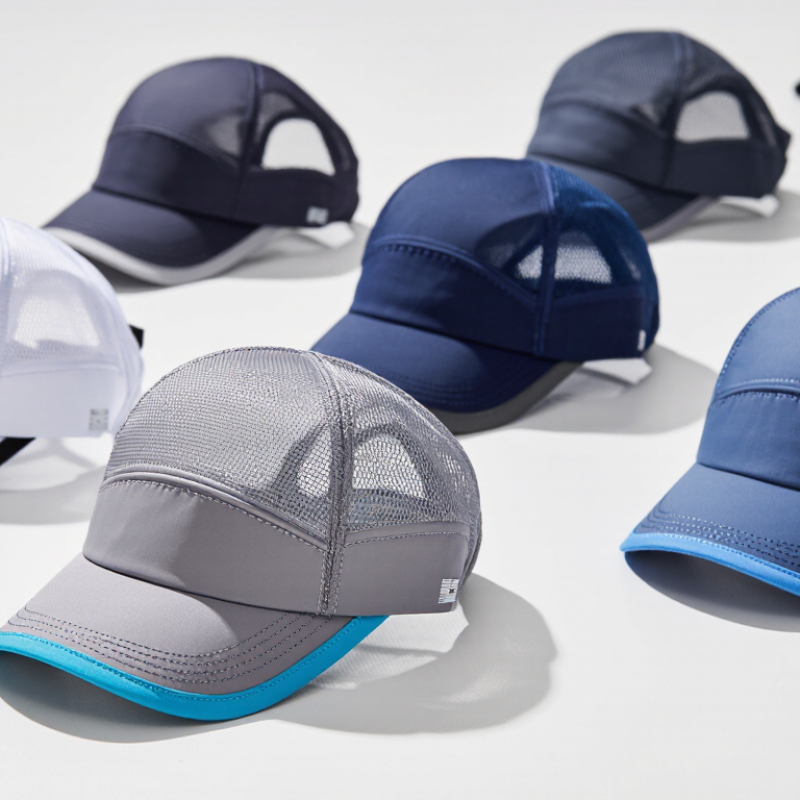
2026 Top Breathable Running Caps for Wholesale Buyers

Defining Breathability: ASTM D737 Airflow Testing at 125 Pa

For wholesale buyers, “breathable” should be more than a mesh-panel claim. ASTM D737 measures a fabric’s air permeability under a controlled pressure difference. At 125 Pa, air is drawn through a defined test area, and the airflow is recorded. Higher readings generally indicate more air passing through the tested fabric. Small details matter.

Ask for the test report, including the pressure, units, sample conditioning, and number of specimens. A crown mesh, sweatband, and brim lining can behave very differently. Testing one fabric swatch does not describe the airflow of the finished cap. Request samples from the actual construction, and confirm which panels were tested. Repeat measurements can also reveal variation between production lots.

The method has limits. It measures airflow through material, not how cool a runner will feel outdoors. Fit, humidity, sweat, and sun exposure also affect comfort. Even a strong result at 125 Pa cannot settle every wear question. Use the data to compare like-for-like fabrics, then assess finished caps during wear trials. A report without clear sampling details may look precise while leaving important gaps.

Comparing Cap Fabrics by Air Permeability, Moisture Wicking, and Durability

Wholesale buyers comparing breathable running caps should test finished fabric panels, not fiber names alone. Open polyester mesh can pass more air than tightly woven cotton, but seams and linings may restrict airflow. ASTM D737 measures air permeability under specified pressure conditions. Compare supplier reports only when test conditions match. Small differences matter.

Moisture regain and sweat transport are not the same thing. ASTM D1909 lists commercial moisture-regain values of 8.5% for cotton and 0.4% for polyester. These figures describe moisture held by fibers, not how quickly sweat moves across a cap. For that, request an AATCC TM195 liquid-moisture-management report on the actual fabric, including its wicking finish. Finishes may weaken after washing.

For durability, ask for abrasion results using ISO 12947-2, then wash and wear samples before placing a bulk order. Mesh may improve ventilation, yet snag more easily around the crown. Check the sweatband, brim stitching, and shape recovery after the cap becomes damp. One caveat: a lab swatch cannot fully predict a hot run. Test the intended colorway and construction, not just a white fabric sample.

Assessing Fit and Ventilation: Panels, Brims, Closures, and Sizing

For wholesale buyers, ventilation starts with panel placement, not simply the amount of mesh. A solid front panel can hold its shape, while perforated side and rear panels help release heat around the crown. ASTM D737-18(2023), Standard Test Method for Air Permeability of Textile Fabrics, measures airflow through fabric under a controlled pressure difference. Ask suppliers for test results by fabric and color; dark dyes and coatings can change performance. More mesh is not automatically better.

Fit matters. A cap that sits too low can trap warmth; one that rides high may shift during a run. Check crown depth on several head sizes, then test the closure with repeated adjustments. Hook-and-loop closures offer range, while a buckle can feel more secure but may add weight. The brim should shade the eyes without blocking vision or flapping in wind. Small details count. NIOSH’s 2016 heat-stress criteria explain that clothing can impede evaporative cooling, so buyers should assess lining, sweatband, and fabric together. Request wear trials in humid conditions, not just studio photos. A size chart helps, but it cannot replace a real fit test. That gap is easy to overlook.

2026 Top Breathable Running Caps for Wholesale Buyers — Assessing Fit and Ventilation: Panels, Brims, Closures, and Sizing

Cap Construction Panel Layout Ventilation Features Brim Design Typical Closure Common Size Approach Fit and Use Considerations Wholesale Buyer Checks
Lightweight woven performance cap Usually a multi-panel crown, commonly five or six panels; seam placement varies by pattern. Lightweight woven fabric may release heat through the material. Some versions add small eyelets or mesh sections. Soft or semi-structured brim; often designed to bend for storage. Adjustable hook-and-loop strap or a slide buckle. Often one adjustable size; some makers offer separate size ranges. A versatile choice for everyday road running. Crown depth and strap range affect security during movement. Request finished cap measurements, fabric composition, colorfastness details, and a fit sample before approving bulk production.
Mesh-panel running cap Woven front panels paired with mesh side or rear panels; panel placement differs by design. Open mesh can increase airflow in covered areas. Mesh size and coverage influence both ventilation and sun exposure. Typically a lightweight, flexible brim. Adjustable rear strap, commonly with a buckle or hook-and-loop fastening. Usually adjustable; confirm the usable head-circumference range. Useful for warm conditions, but a loose fit or stiff seams may cause movement or rubbing. Check mesh durability, seam finishing, strap comfort, and whether the front remains stable when the cap is damp.
Perforated-panel cap Typically a structured or semi-structured crown with perforations in selected panels. Perforations provide localized airflow; the amount depends on hole size, spacing, and panel area. Short-to-medium brim, commonly flexible or lightly structured. Adjustable strap or elasticized rear construction. Adjustable sizing is common; elastic versions may cover a narrower fit range. Offers a more continuous exterior than full mesh. Perforated zones do not provide the same coverage as solid fabric. Inspect perforation consistency, edge strength, and coverage against the intended use and decoration method.
Unstructured packable cap Soft crown, often made with several lightweight panels and minimal internal reinforcement. Breathability depends mainly on fabric weight and weave; eyelets may be included. Flexible brim that can often be folded or rolled, depending on materials and construction. Adjustable rear strap, elastic drawcord, or similar low-profile closure. Most commonly one adjustable size. Low-bulk construction suits travel and storage. A soft crown may provide less shape retention than a structured cap. Test recovery after folding, closure security, and fit across the intended customer size range.
Structured performance cap Reinforced front panels help the crown retain its shape; side and rear panels may vary in fabric. Ventilation may come from eyelets, breathable fabric, or mesh sections rather than the structure itself. Usually a shaped, semi-rigid brim with a defined curve. Adjustable strap or a fitted-size construction. Available as adjustable or in multiple fitted sizes; confirm the supplier’s measurement chart. Retains a defined silhouette, but crown stiffness and depth should be checked for comfort during extended wear. Review front-panel reinforcement, brim shape consistency, embroidery compatibility, and size grading.
Low-profile running cap Shallow crown with a close-fitting, low-volume panel pattern. May use lightweight fabric, eyelets, or limited mesh; ventilation varies by model. Generally short or medium length, often flexible. Adjustable strap or elastic rear section. Often adjustable; low-profile fit can feel smaller than a standard-depth cap. Can suit runners who prefer less crown volume. Check that the cap does not sit too tightly or ride up. Test on different head shapes and record crown depth as well as circumference before placing a volume order.
Sun-coverage running cap Multi-panel crown; some designs add a rear neck flap or extended side coverage. Lightweight fabrics and mesh zones may aid airflow, while added coverage can retain more heat. Often a longer brim for additional face coverage; brim stiffness varies. Adjustable strap, drawcord, or elastic closure. Usually adjustable; extended coverage should not interfere with the closure or neck movement. Prioritizes coverage as well as ventilation. Suitability depends on the balance between fabric coverage and airflow. Check coverage dimensions, flap attachment, brim stability, and comfort while turning the head.

Buyer note: These are common construction options, not specifications for a single product. Exact panel count, materials, measurements, and fit ranges vary by manufacturer; request a current specification sheet and approve a physical sample before ordering.

Checking Sun Protection: UPF Ratings and AATCC TM183 UV Testing

2026 Top Breathable Running Caps for Wholesale Buyers

A light cap can still leave runners exposed. The World Health Organization and IARC estimated 1.5 million new skin cancer cases and 120,000 related deaths worldwide in 2020; ultraviolet radiation is a major cause. For wholesale buyers, UPF is useful evidence, but it describes tested fabric, not every part of a finished cap. A mesh side panel, curved brim, or exposed seam can change practical coverage. Small details matter.

Ask suppliers for test reports using AATCC TM183, a method for measuring ultraviolet transmission and reflection through textile specimens. The results help determine a fabric’s UPF. UPF 50, for example, transmits about 1/50 of erythemally weighted UV radiation under the test conditions. Numbers matter. Check that the report identifies the exact fabric, color, and construction being purchased. Darker dyes and tighter weaves may perform differently, while moisture and stretching can affect some materials. One test is not the whole story. I would also request samples and examine coverage, airflow, and fit during wear; a cap that feels hot may stay in the carton. Lab data supports a claim, but it cannot replace practical checks or careful review of applicable labeling requirements.

2026 Breathable Running Caps: Understanding UPF Protection

A reference comparison of the theoretical UV protection represented by selected UPF values. UV blocked is calculated as (1 − 1/UPF) × 100.

For wholesale evaluation: AATCC TM183 measures the spectral transmittance of fabrics and supports UPF assessment. Request a relevant lab report for the actual cap fabric; UPF describes fabric performance, while cap coverage, fit, and exposed areas also affect sun protection.

Planning Wholesale Orders: MOQ, Lead Times, Quality Checks, and Cost per Unit

For a wholesale order, clarify whether the minimum order quantity applies per color or across the full run. Custom colors, labels, and trims can raise the minimum. Request a pre-production sample and confirm its fabric, fit, and finish in writing. A low unit price means little if the approved sample differs from bulk goods.

Ask for separate timelines for sampling, production, and delivery. Mesh panels and sweat-wicking bands may require extra sourcing time, especially for custom specifications. Set a check-in date before production starts, then leave room for delays. Build in slack. A supplier’s estimated schedule is useful, but it is not a promise.

Quality checks should cover airflow, seam strength, brim shape, and the adjuster’s hold. Try the cap during a short run: does the band feel damp quickly, or does the cap shift when wet? Compare bulk units with the approved sample, and inspect a random selection before shipment. Check the details.

For cost per unit, include decoration, packaging, freight, and any inspection fees—not just the factory quote. Divide the total order cost by the number of saleable caps, allowing for defects or replacements. Quotes are easier to compare when every supplier prices the same fabric, features, quantity, and delivery terms. One missed cost can distort the budget.

FAQS

Why should buyers test finished fabric panels instead of comparing fiber names alone?

Open mesh may pass more air than tightly woven cotton. Seams, linings, and coatings can still restrict airflow. Test the assembled fabric.

How can buyers compare air-permeability reports fairly?

Compare results only when pressure conditions and test methods match. Ask for reports by fabric and color. Small differences matter.

Does higher moisture regain mean a cap dries sweat faster?

No. Moisture regain describes water held by fibers, not sweat movement across fabric. Request a liquid-moisture report for the finished fabric. Finishes may weaken after washing.

What should buyers check when evaluating durability?

Review abrasion results, then wash and wear samples before ordering in bulk. Check the sweatband, brim stitching, and shape after damp use. Mesh can snag.

Does adding more mesh always improve ventilation?

Not necessarily. A solid front panel can support the cap, while side and rear panels release heat. More mesh is not automatically better.

How can buyers assess fit across different head sizes?

Check crown depth on several people. Adjust each closure repeatedly and see whether the cap stays in place. A size chart cannot replace a fit test.

What should buyers look for in a brim and closure?

The brim should shade the eyes without blocking vision or flapping in wind. A buckle may feel secure, but it can add weight. Details matter.

Why test caps in humid conditions?

Humidity can make sweat evaporation harder. Try the cap during real wear, and assess its lining, sweatband, and fabric together. Studio photos miss things.

Conclusion

Choosing the right Breathable Running Cap for wholesale requires more than comparing appearance. Breathability can be assessed through ASTM D737 air-permeability testing at a pressure of 125 Pa, while fabric options should also be compared for moisture-wicking performance and durability. Together, these factors help buyers evaluate how a cap may perform during active use and repeated wear. Panel construction, brim design, closure type, and available sizing also affect airflow, comfort, and fit across different users.

Sun protection is another important consideration. Buyers can review stated UPF ratings and use AATCC TM183 UV testing information to understand how materials are evaluated for ultraviolet protection. Before placing an order, confirm the minimum order quantity, production lead time, and quality-check process, including consistency in materials, stitching, sizing, and finishing. Comparing these details alongside the cost per unit supports a more informed wholesale decision and helps balance performance, quality, and budget.

Elowen

Elowen

Elowen is a marketing professional with a deep understanding of the company’s products, their practical applications, and the needs of the people who use them. With a thoughtful, research-led approach, Elowen turns product knowledge into clear, useful information that helps readers make confident......