2026 Best Kids Stainless Steel Cup for School and Travel
Table of Contents
- What Defines a Kids’ Stainless Steel Cup for School and Travel?
- How Cup Materials, Lids, and Insulation Affect Everyday Use
- Which Features Matter Most When Choosing a Cup for Children?
- How to Match Cup Size and Design to School and Travel Needs
- How to Clean and Maintain a Kids’ Stainless Steel Cup Safely
- FAQS
- Conclusion
- Related Posts
A school cup has a practical job: survive a crowded backpack, fit small hands, and make water easy to reach. The 2026 search for the best Kids Stainless Steel Cup is not just about choosing a bright color. Lid design, cup weight, grip, and cleaning all matter during a busy school day. A leak-resistant lid can help, but no cup should be assumed fully leakproof without checking its instructions.
Children’s drinkware product specialist Maya Chen puts it this way: “The best cup is the one a child can open, carry, and clean with confidence.” That is a useful test. Imagine a child reaching into a lunch bag between classes, or carrying a cup on a family trip. Can they manage the lid without help? Does the cup fit the side pocket? Are the small parts easy to inspect and wash?
Small details count. A slippery finish can frustrate little hands. A complicated lid may collect residue if it is not cleaned carefully. And a cup that looks sturdy in a product photo may feel heavy when filled. No single design suits every child. Age, habits, and school routines vary.
This guide compares features that matter for school and travel, including capacity, lid style, portability, and care. It also leaves room for a less exciting truth: even a well-chosen cup needs regular cleaning and occasional checks for wear. A good choice should make daily routines simpler—not perfect.
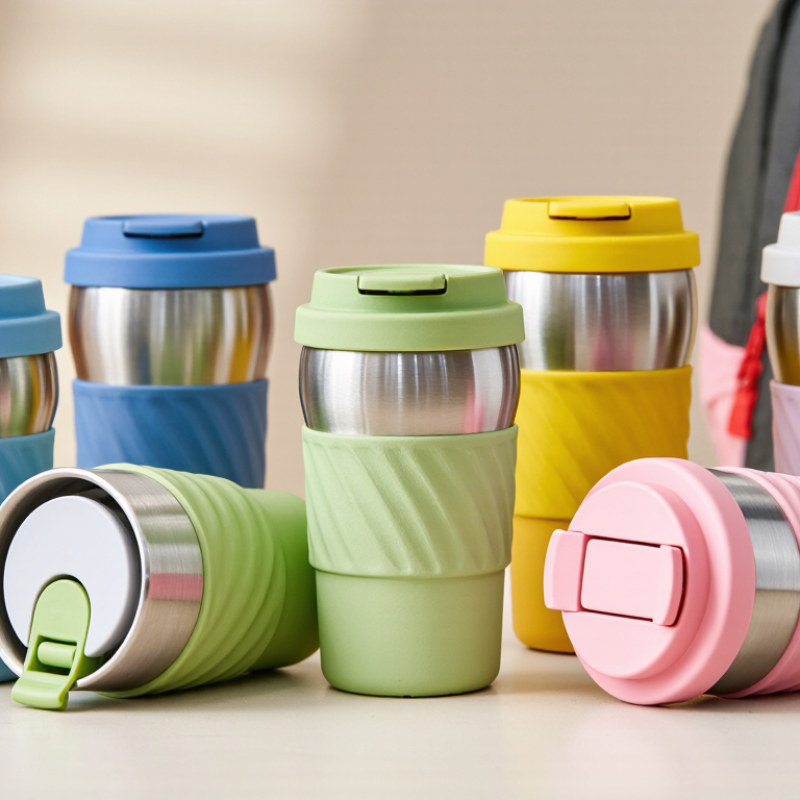
What Defines a Kids’ Stainless Steel Cup for School and Travel?
A kids’ stainless steel cup for school and travel should be easy to carry, clean, and drink from without constant adult help. A light body matters when it sits in a small backpack beside a lunchbox. Rounded edges, a grippy finish, and a lid that opens with one hand can make the daily routine smoother. Small details matter. Check that the drinking spout and removable gasket are reachable for cleaning; trapped milk or juice residue can be easy to miss.
Capacity should suit the child, not just the product photo. The National Academies’ Dietary Reference Intakes report gives adequate total-water intakes of 1.7 liters daily for children aged 4–8, and 2.1–2.4 liters for ages 9–13. These totals include water from food and all drinks, so a cup need not hold the full amount. A moderate, refillable size may be easier for younger children to manage. Leave room for ice, too; listed capacity can differ from usable capacity.
For travel, look for a secure lid, a leak-resistant seal, and construction that does not rattle when packed. Ask for clear material and food-contact information, rather than relying on vague “safe” wording. I would test a new cup with water in a bag over a towel. It is not a perfect test, but it can reveal a loose lid before the school run.
How Cup Materials, Lids, and Insulation Affect Everyday Use
A children’s stainless steel cup can handle a crowded backpack, but its material is only part of the story. Food-grade stainless steel is durable and does not hold onto odors as easily as some plastics. It can still dent when dropped on a hard school floor. Check the inside and rim for damage, and follow the maker’s care instructions. A plain cup is often easier to clean. Not always exciting.
The lid may matter more during a school day. A secure, simple lid helps reduce spills when the cup tips beside a lunchbox. Small drinking openings and removable seals can be useful, but they need regular washing. If parts are difficult to take apart, residue may collect around the edges. Test the lid at home before packing it. A little water on the desk is better than a soaked homework folder.
Insulation affects what children actually drink. Double-wall construction can keep water cool through a warm afternoon, though it may make the cup heavier. That trade-off matters for smaller hands. Insulated cups can also keep hot drinks hot enough to cause burns, so cold or room-temperature drinks are often more practical for young students. Consider the child’s grip, the backpack pocket, and how quickly the cup dries after washing. The perfect cup is unlikely. A manageable one gets used.
Which Features Matter Most When Choosing a Cup for Children?
A school cup should fit a child’s hand, backpack, and daily routine. Look for a manageable capacity; a very large cup can feel heavy when full. A narrow shape and textured grip may help small hands hold it securely. Small details matter. Check that the rim is smooth and the lid closes without requiring excessive force. For stainless steel, review the product’s material information and care instructions rather than relying on appearance alone.
A leak-resistant lid is useful for travel, but no cup should be assumed completely spill-proof. Test it over a sink before packing it beside books or clothing. Easy cleaning matters just as much: wide openings make it easier to reach inside, while removable seals can help prevent trapped residue. Some lids have more parts than parents expect. Choose a design that can be reassembled correctly and cleaned often. Insulation can keep drinks cool or warm, but it may also make a cup heavier. Consider the child’s age, grip, and school-day needs, and check whether replacement seals are available. A cup that is simple to use and maintain is often more practical than one with extra features.
| 2026 Best Kids Stainless Steel Cup for School and Travel — Which Features Matter Most When Choosing a Cup for Children? | ||||
|---|---|---|---|---|
| Feature | What to Look For | Why It Matters | School Use | Travel Use |
| Food-contact materials | Clearly identified food-contact stainless steel for the cup body, with lid and seal materials specified by the manufacturer. | Material information helps caregivers check suitability, care instructions, and any relevant safety documentation. | Check that the cup is intended for the child’s age group and everyday beverage use. | Confirm that all parts that touch the drink are identified and easy to inspect. |
| Capacity | Choose a capacity the child can comfortably carry and finish; compare the stated capacity with the child’s usual drink needs. | A larger cup may hold more liquid but can be heavier when full. | A moderate capacity can be easier to fit in a school bag or lunch area. | Consider how much liquid is needed between planned refill stops. |
| Weight and grip | Look for a manageable empty weight, a shape suited to small hands, and a stable base. | Comfortable handling can make a cup easier for children to carry and drink from independently. | Check whether the child can lift and open it without help. | A lighter cup can be more convenient on walks and outings. |
| Lid and drinking style | Select a lid the child can operate reliably, such as a simple flip, straw, or open-mouth design, depending on age and preference. | Different designs have different cleaning needs and may not suit every child. | Practice opening, drinking, and closing the cup before sending it to school. | For use in a moving vehicle, follow the vehicle’s safety guidance and avoid drinking while the child is unrestrained. |
| Leak resistance | Check the manufacturer’s leak-resistance claims and whether the lid must be fully closed or locked to help prevent spills. | No lid design should be assumed leakproof unless the manufacturer specifies its performance and conditions. | Test the closed cup with water before packing it alongside books or electronics. | Keep the cup upright where possible, especially if it contains a hot or carbonated drink. |
| Cleaning and care | Look for parts that can be disassembled for cleaning and clear instructions on hand-washing or dishwasher use. | Straws, valves, and seals can retain residue if they are not cleaned and dried properly. | Check whether the cup can be cleaned thoroughly as part of the household’s regular routine. | Make sure removable parts can be reassembled correctly after cleaning. |
| Insulation | If temperature retention is needed, check whether the cup is insulated and review the manufacturer’s stated use and care guidance. | Insulation can affect drink temperature, but it does not replace safe handling of hot beverages. | Confirm school rules about insulated cups and the types of drinks permitted. | For children, avoid filling the cup with a drink hot enough to cause a burn. |
| Durability and maintenance | Inspect the body, lid, seals, and moving parts; check whether replacement components are available and how damage should be handled. | Dents, damaged seals, or worn closures can affect usability and may make a cup harder to clean. | Choose a design that can withstand ordinary handling and can be identified as the child’s cup. | A protective sleeve or sturdy shape may help reduce cosmetic wear, but does not prevent all damage. |
| Overall fit for the child | Match the cup’s size, opening, lid mechanism, and care requirements to the child’s age, coordination, and routine. | The most useful cup is one the child can use safely and caregivers can maintain consistently. | Have the child try carrying and using it before the first school day. | Consider the bag’s cup-holder or side-pocket dimensions before purchasing. |
How to Match Cup Size and Design to School and Travel Needs
Choosing a stainless steel cup starts with the child’s daily routine, not the largest capacity on the shelf. For a short school day, a cup around 300–450 ml may be easier to lift and finish. Longer trips or sports can call for more water, but a heavier, fuller cup may be awkward for small hands. Small hands matter. Check the cup’s height against the backpack’s side pocket and the family car’s cup holder before buying.
Design should make ordinary tasks manageable. A wide opening is easier to refill and clean, while a narrow spout may help limit splashes during a bumpy ride. Look for a lid that closes securely and can be taken apart for regular washing. Check its parts, too. If a child uses a straw, make sure the straw and its channel are easy to reach with a cleaning brush. A cup that is difficult to clean can become a poor daily choice, even when its size seems ideal.
For school, a simple shape with a comfortable grip can be easier to carry between desks and lunch tables. For travel, a secure lid and a base that fits common holders may matter more. It is tempting to choose one cup for every outing, but that compromise will not always work. A large cup can stay half-full at school; a compact one may need repeated refills on a long day. Try the cup with water at home, then notice whether your child can open, drink from, and close it without help. I might still guess wrong. Small details are easy to miss.
How to Clean and Maintain a Kids’ Stainless Steel Cup Safely
A kids’ stainless steel cup can look clean while milk residue hides beneath its lid. Take the cup apart after each school day, removing the gasket, straw, and other pieces the instructions allow. Wash them with warm water, mild dish soap, and a soft bottle brush. Pay attention to narrow corners. Small parts matter.
Rinse every piece well, then let it air-dry completely on a clean rack before reassembling. Trapped moisture can cause stale smells, especially around seals. A dishwasher is convenient, but use it only if the cup’s care instructions say it is safe. High heat may warp some lids or seals. Avoid abrasive pads and harsh cleaners; they can scratch surfaces or damage parts. I find it easy to rush the drying step. That is often the part worth slowing down for.
Check the cup regularly for dents, loose seals, cracks, or a straw that no longer fits securely. Replace damaged parts if suitable replacements are available, and stop using pieces that cannot be cleaned properly. Wash the cup promptly after smoothies or other thick drinks, rather than leaving it in a backpack overnight. If an odor remains, wash and rinse again, then follow the maker’s care guidance. Don’t guess with strong cleaning solutions.
FAQS
Around 300–450 ml can be manageable for a short school day. Leave room for ice; usable capacity may be smaller.
Check the lid, gasket, and drinking spout. Test it with water over a towel. Not foolproof.
A grippy surface and one-hand lid can help. Try opening and closing it at home first.
Milk or juice residue can hide around the gasket and spout. Removable parts help. Small channels are easy to miss.
A secure lid, quiet construction, and a base that fits the car’s cup holder can help. Check the backpack pocket, too.
Maybe, but not always. A large cup can feel heavy, while a compact one may need frequent refills.
Make sure the straw and its channel are reachable with a cleaning brush. Otherwise, cleaning gets tedious.
No. Daily intake includes water from food and other drinks. Needs also vary by age and activity.
Conclusion
A Kids Stainless Steel Cup for school and travel should be durable, comfortable for small hands, and easy to carry throughout the day. Its material, lid, and insulation all affect everyday use: stainless steel offers a sturdy option, while a secure, child-friendly lid can help reduce spills in a backpack. Insulation may keep drinks at a more suitable temperature, depending on a child’s routine and the beverage.
When choosing a cup, consider its capacity, weight, grip, opening style, and how easily it fits into a lunch bag or travel pack. A simple design with accessible parts can make drinking and cleaning easier for children and caregivers. Match the cup’s size to the child’s age and typical outings, and check that it is comfortable to use. Regularly wash all components according to care instructions, dry them thoroughly, and inspect the cup for wear to help keep it clean and ready for daily use.

Blog Tags: