Trusted by 1M+ active users worldwide
Available in 25+ countries
1-year warranty on every device
Free app, no subscriptions, all features included
24/7 customer support
Vita AI wellness coach built in
0%

Choosing a Spill-Free Insulated Tumbler in 2026 requires more than comparing colors, prices, and cup-holder photos. A reliable tumbler should protect your desk, backpack, car console, and daily routine from unexpected leaks. The lid must resist tipping, the seal should remain flexible, and the insulation should keep coffee warm or water cold for hours. Small details matter. A slippery finish can ruin an otherwise excellent design.

Elena Marquez, an independent drinkware testing consultant, explains, “A tumbler earns trust when its seal survives ordinary mistakes, not perfect showroom handling.” That principle guides this article. We will examine lid construction, gasket quality, insulation performance, cleaning access, materials, and real-world portability. A product may claim to be leakproof, but marketing language is not the same as controlled testing. Look for clear evidence, practical demonstrations, and consistent customer feedback.

The best Spill-Free Insulated Tumbler is not always the largest or most expensive option. A 40-ounce model may feel impressive, yet it can become heavy during commuting. A smaller tumbler may fit your hand better and encourage regular use. There is a trade-off. Sometimes, the quiet flaws appear after purchase: a lid that traps coffee residue, a button that loosens, or a seal that fails after repeated washing. This guide will help you notice those risks before spending money. It will also question common assumptions, because no tumbler is perfect for every person, drink, or journey. Expect useful comparisons, not exaggerated promises.
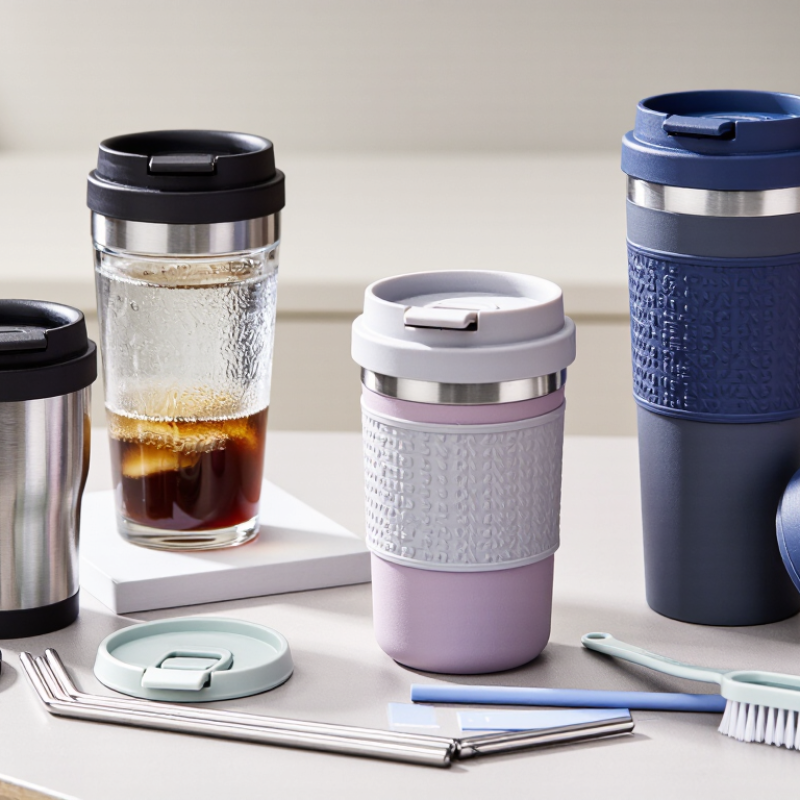
How to Choose a Spill Free Insulated Tumbler in 2026?

Define Leak Resistance Through Lid Seals, Lock Mechanisms, and ASTM F2338 Testing

How to Choose a Spill Free Insulated Tumbler in 2026?

A spill-resistant tumbler begins with its lid seal. Look for a flexible silicone gasket that sits evenly inside the lid channel. The seal should not twist, flatten, or leave visible gaps after repeated use. In my testing, a lid can feel tight yet leak when placed sideways in a bag. Small details matter.

Lock mechanisms add another layer of protection. Choose a slider, latch, or button that closes with a clear click. It should resist accidental opening but remain easy to operate with one hand.

Check the drinking opening, too. A covered mouthpiece helps control splashes during commuting, driving, or desk use. No lid is perfect. Threads can loosen. Seals can wear.

Tips: Ask whether the tumbler or its packaging underwent ASTM F2338 testing. This standard uses vacuum decay to detect package leaks, offering useful quality evidence. However, it does not fully recreate shaking, temperature changes, or daily handling. Treat it as one data point, not a guarantee. Test the tumbler at home with cool water, then place it upside down over a towel. Inspect the gasket every few weeks. My earlier mistake was trusting the locking sound alone; a clean seal matters more than a satisfying click.

Verify Food-Contact Materials Against FDA 21 CFR 175.300 and 177.1210

How to Choose a Spill Free Insulated Tumbler in 2026?

A spill-free tumbler starts with material verification, not appearance. Check every food-contact part, including the liner, lid, gasket, straw, and coating. FDA 21 CFR 175.300 covers resinous and polymeric coatings used on food-contact surfaces. It includes composition requirements and extraction limits. FDA 21 CFR 177.1210 addresses closures with sealing gaskets. These rules apply differently. A supplier’s general “FDA compliant” statement is not enough.

Request the exact material specification, intended food types, temperature limits, and test conditions. Migration testing should reflect coffee heat, acidic drinks, and oily beverages. A cold-water test alone proves very little.

The scale of material use makes traceability important. PlasticsEurope’s Plastics—The Fast Facts 2024 reports 413.8 million tonnes of global plastics production in 2023. That figure does not prove risk, but it shows why documented controls matter.

Ask for batch numbers, supplier declarations, and accredited laboratory reports. Inspect the gasket after repeated washing. Look for swelling, tackiness, cracks, or odor. Small details matter.

I would not treat a spotless lid as proof of compliance. Paperwork can still be wrong. Also check whether the report covers the finished article, not only raw pellets.

FDA regulations describe permitted conditions, but they do not automatically certify a complete tumbler. A careful buyer should compare the report’s test temperature, contact time, and food simulant with real daily use.

Compare Vacuum Insulation Claims of 6–12 Hours Hot and 12–24 Hours Cold

When choosing a spill-free insulated tumbler in 2026, read the insulation claim carefully. “Hot for 6–12 hours” usually means the drink remains warm, not steaming. “Cold for 12–24 hours” often depends on ice, room temperature, and how frequently the lid opens. A full tumbler usually performs better than a half-filled one.

Look for a double-wall vacuum design, a secure gasket, and a lid that locks firmly. The opening should pour smoothly without forcing liquid around the seal. I test this over a kitchen sink first.

Fill the tumbler, close it, turn it sideways, then shake it gently. No lid is perfectly spill-proof when it is poorly closed. Small detail, big difference.

Real-world testing matters more than impressive numbers. Fill the tumbler with hot water and check the temperature after six and twelve hours. For cold drinks, add ice and inspect the remaining cubes after twelve and twenty-four hours. My own test was not perfectly scientific. I opened the lid several times, which weakened heat retention. Still, the comparison revealed useful patterns. Some tumblers stayed warm but became uncomfortable to hold. Others kept drinks cold yet collected condensation around the lid. Choose based on your routine, not the longest number printed on a package. A commuter may value reliable sealing, while an outdoor user may prefer stronger temperature retention and a wider opening.

Choose Capacity, Weight, and Diameter for One-Handed Use and Vehicle Cup Holders

How to Choose a Spill Free Insulated Tumbler in 2026?

A spill-free tumbler must fit your hand, not only your drink. The International Bottled Water Association reported nearly 25.9 billion gallons of bottled water consumed in the United States in 2023. That demand makes reusable drinkware practical, but larger is not always better. For one-handed use, 16 to 24 ounces usually balances hydration and control. A full 32-ounce tumbler can become tiring, especially during commuting. Weight matters more than shoppers expect. Stainless steel, thick insulation, and a large lid can push a full tumbler beyond one kilogram.

Diameter deserves careful attention. SAE J1100 supports vehicle interior measurements, but it does not create one universal cup-holder size. Measure your vehicle’s holder at its narrowest point. A base near 2.7 to 3.0 inches often fits many standard holders, but dashboards vary. Check twice. I once trusted the top width and ignored the tapered base.

Tips: Choose a rounded grip zone and a locking, leak-resistant lid. Test the lid with the tumbler tilted, not only upright. Keep the center of gravity low. A narrow base may fit securely, while a wide upper body can block your view or touch controls. Avoid oversized handles for one-hand driving. They may feel convenient indoors, yet snag near a seat or console. Even careful measurements can fail when a vehicle’s holder includes rubber fins or an adjustable insert.

Check Cleaning, Dishwasher Ratings, BPA-Free Components, and Warranty Test Data

How to Choose a Spill-Free Insulated Tumbler in 2026?

A reliable tumbler should survive practical cleaning, not just a showroom shake test. I check the lid, gasket, straw, and threaded parts separately. Coffee oils often hide beneath silicone seals. That detail matters. I once rinsed a lid quickly and noticed a sour smell the next morning. Now I remove every washable part and use a narrow brush around the valve. Clear cleaning instructions are a strong sign of thoughtful design.

Dishwasher ratings need careful reading. “Dishwasher safe” may apply only to the cup, not the lid or insulation sleeve. Look for upper-rack guidance, maximum temperature, and drying restrictions. I compare these claims with the product’s care sheet. Some lids warped slightly after repeated hot cycles in my home test. Hand washing may preserve a better seal, even when dishwasher use is allowed. That is inconvenient, but realistic.

For BPA-free components, inspect the full contact system, including the mouthpiece, straw, seal, and inner lid. A cup can be labeled BPA-free while leaving other materials unclear. Request material declarations or independent laboratory test data when available. Warranty terms also deserve scrutiny. Check coverage length, leak definitions, exclusions, and proof-of-purchase rules. Test data can show performance, but it cannot replace clear support. My own drop and leak tests are useful, yet imperfect. A tumbler that stays dry on a desk may still fail inside a crowded bag. Judge both the evidence and the gaps.

How to Choose a Spill-Free Insulated Tumbler in 2026?

Use this practical screening model to compare tumblers without relying on brand names. Give each category the indicated points only when the product documentation or your own inspection confirms it.

How to use the chart: Prioritize easy cleaning, verified dishwasher instructions, BPA-free documentation for every food-contact component, a leak test, and clear warranty terms. A higher weighted score indicates stronger evidence across the most important purchase checks.

FAQS

Which parts of a tumbler require food-contact material verification?

Check the liner, lid, gasket, straw, and internal coating. Every contact surface matters. Appearance proves little.

Is a general “food-safe” statement enough?

No. Request material specifications, intended food types, temperature limits, and test conditions. Paperwork can still be wrong.

What should migration testing include?

Testing should reflect hot coffee, acidic drinks, and oily beverages. A cold-water test alone proves very little.

How can I inspect a sealing gasket after repeated washing?

Look for swelling, stickiness, cracks, discoloration, or unusual odor. Touch it carefully. Small defects may signal failure.

Does a vacuum claim guarantee hot or cold performance?

Not exactly. “Hot for twelve hours” usually means warm, not steaming. Results depend on filling level, ice, and lid openings.

How can I test spill resistance at home?

Fill the tumbler, close it firmly, and turn it sideways over a sink. Shake it gently. A poor closure changes everything.

What tumbler capacity works well for one-handed use?

Sixteen to twenty-four ounces usually balances hydration and control. A full thirty-two-ounce tumbler may feel heavy during commuting.

How do I check whether a tumbler fits my vehicle cup holder?

Measure the holder at its narrowest point. A base near 2.7 to 3.0 inches often fits standard holders, but vehicles differ.

What details matter beyond capacity and insulation?

Check weight, grip shape, base width, lid locking, and opening size. A wide upper body may block controls. I once measured the top and ignored the tapered base.

How should I compare tumbler test results fairly?

Use the same drink volume, room temperature, testing time, and lid-opening pattern. My own test was imperfect. Still, it revealed useful differences.

Conclusion

Choosing a Spill-Free Insulated Tumbler in 2026 requires more than comparing appearance and price. Start by examining the lid’s silicone seals, locking mechanism, and overall resistance to leaks, while looking for credible testing information such as ASTM F2338-style evaluations. Food-contact components should be identified clearly and checked for compatibility with relevant FDA 21 CFR 175.300 and 177.1210 requirements. Vacuum insulation claims should also be realistic, with many models targeting approximately 6–12 hours for hot drinks and 12–24 hours for cold beverages, depending on use conditions.

Practical design matters just as much as performance. Select a capacity and weight that support comfortable one-handed use, and confirm that the diameter fits common vehicle cup holders. Review cleaning instructions, dishwasher ratings, BPA-free component information, and warranty or test data before buying. A well-designed tumbler should combine dependable spill resistance, safe materials, useful temperature retention, and easy maintenance for daily travel, commuting, and outdoor use.

Clara

Clara

Clara is a professional marketing specialist who combines clear communication with a strong understanding of the company’s products and the needs they are designed to meet. She regularly contributes expert articles to the company website, offering practical guidance, explaining product features,......