Trusted by 1M+ active users worldwide
Available in 25+ countries
1-year warranty on every device
Free app, no subscriptions, all features included
24/7 customer support
Vita AI wellness coach built in
0%

A Smart Digital Kitchen Scale is more than a small platform with glowing numbers. It connects weight measurement with modern cooking habits. Depending on the model, it may track grams, ounces, calories, nutrients, recipes, and serving sizes through a mobile app. That makes it useful for home cooks, athletes, parents, and people managing specific dietary goals.

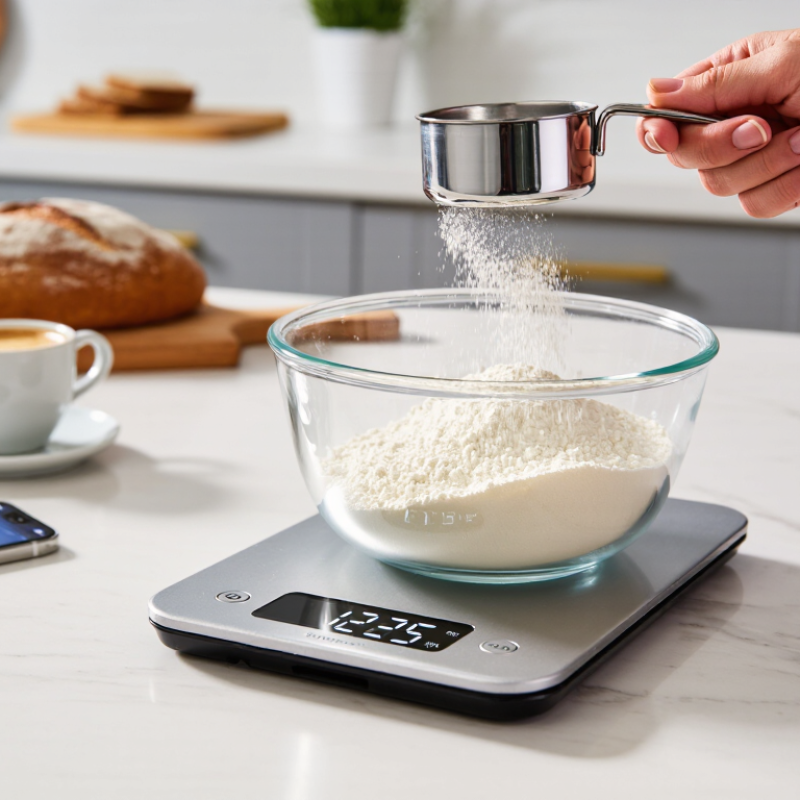
Precision starts with ordinary details. A bowl sits flat on the sensor. Flour falls in slowly. The display changes from 124 grams to 125. Small differences can affect bread texture, coffee strength, or portion accuracy. However, this technology is not automatically perfect. Battery levels, uneven surfaces, moisture, and calibration errors can influence readings. Users must still check the scale and question unusual results.

Dr. Yoni Freedhoff, an obesity-medicine physician and nutrition authority, has emphasized a practical truth: “There is no one-size-fits-all diet.” That idea also applies to kitchen technology. A Smart Digital Kitchen Scale should support personal routines, not dictate them. Someone baking sourdough needs repeatable measurements. Someone monitoring sodium may need reliable ingredient data. A busy family may value quick tare functions more than detailed nutrition reports.

The best models combine clear displays, stable sensors, easy cleaning, and trustworthy software. Privacy deserves attention, too. Connected devices may collect dietary information. Buyers should review app permissions before syncing personal data.

Smart scales can reduce guesswork.

They cannot replace judgment.

This guide examines how they work, what features matter, and where their advertised intelligence may fall short.
What Is a Smart Digital Kitchen Scale?

Definition and Core Features of a Smart Digital Kitchen Scale

What Is a Smart Digital Kitchen Scale?

A smart digital kitchen scale measures food weight and connects that measurement with digital nutrition tools. Unlike a basic scale, it may use Bluetooth, Wi-Fi, or a companion app. Users can view weight, calories, protein, carbohydrates, and serving sizes on a phone. The device usually includes a load cell, a clear display, tare control, unit conversion, and an automatic shutoff function.

The market is growing. Grand View Research valued the global smart kitchen appliances market at approximately $13.04 billion in 2022. It also projected a 16.6% compound annual growth rate from 2023 to 2030. This wider market figure does not represent smart scales alone, but it shows rising interest in connected food preparation.

Useful features depend on accurate data. A scale can compare ingredients with records from USDA FoodData Central, which provides a large public database of food composition information. Some models store recipes, calculate portions, and track daily intake. Others display measurement changes in real time, helping users add flour slowly or divide dough evenly.

Accuracy matters most.

Smart functions cannot repair incorrect food entries. A packaged product may differ from a database value, and cooked foods can lose or absorb water. That makes nutrition estimates useful, but not perfect. In practical use, a stable counter, regular calibration, and careful ingredient selection improve reliability. The best definition is simple: a smart digital kitchen scale combines precise weighing with connected data, while leaving final judgment to the user.

How Smart Kitchen Scales Measure Weight and Ingredients

What Is a Smart Digital Kitchen Scale?

How Smart Kitchen Scales Measure Weight and Ingredients

A smart digital kitchen scale combines a load cell, a screen, and connected software. The load cell detects pressure when an object rests on the weighing platform. Tiny changes in electrical resistance become weight readings. Most household models display grams, ounces, or milliliters for selected liquids.

The tare function removes the container’s weight before measuring ingredients. This lets you add flour, butter, and milk into one bowl. The sensor needs a firm, level surface for reliable results. Uneven counters can create small errors. I usually wait for the number to stop changing before adding the next ingredient.

Smart features may connect measurements with a recipe application or ingredient database. The scale records 120 grams of flour, but it cannot identify flour by itself. Users must select the correct ingredient. Nutrition estimates then depend on accurate entries and serving sizes. That distinction matters.

Small details affect precision. A warm bowl, spilled powder, or a hand touching the counter can change the reading. Some scales measure in one-gram steps, while others offer finer increments. Their maximum capacity also varies, so heavy mixing bowls require attention.

I once trusted a fast reading and added too much salt. The recipe remained edible, but the result was noticeably sharper. A scale supports careful cooking; it does not replace judgment.

Key Technologies Behind Smart Digital Kitchen Scales

What Is a Smart Digital Kitchen Scale?

Key Technologies Behind Smart Digital Kitchen Scales

A smart digital kitchen scale combines precise weighing hardware with connected software. Most models use strain-gauge load cells beneath the platform. These sensors detect tiny changes in electrical resistance when ingredients add pressure. A stable surface matters. Uneven counters can produce inconsistent readings.

Bluetooth or Wi-Fi transfers measurements to a phone or tablet. The companion app may record ingredients, calculate portions, and estimate calories. Some systems connect measurements with nutrition databases. These databases are useful, but not perfect. A tomato’s size, ripeness, and preparation can change its nutritional values. Users should check important information against reliable dietary sources.

The tare function removes the container’s weight with one button. It makes baking cleaner and portioning faster. High-resolution sensors can measure small amounts, such as yeast or spices. However, accuracy depends on calibration, battery strength, and user habits. I have found that placing ingredients slowly gives more stable results. Moisture near the controls can also cause problems, despite protective designs.

Smart scales may store cooking history in cloud accounts. This feature supports progress tracking, but it raises privacy questions. Read the data policy before creating an account. A bright display helps during busy preparation. A confusing app does not. Technology should reduce friction, not create another task beside the mixing bowl.

Common Functions and Practical Kitchen Applications

A smart digital kitchen scale measures ingredients precisely and adds connected guidance. Common functions include tare weighing, unit conversion, nutrition tracking, timed weighing, and Bluetooth data transfer. Some models store recipes or divide portions automatically. A readable display helps when flour dusts the counter or oil pours slowly.

These tools support practical kitchen habits. I use tare mode between ingredients, so one bowl handles flour, milk, and chopped vegetables. Portion weighing can improve consistency in baking and meal preparation. It may also reduce waste. The UNEP Food Waste Index Report 2024 estimated 1.05 billion tonnes of food were wasted in 2022, with households responsible for 60 percent. FAO reported that 13.2 percent of food was lost before retail in 2021. Accurate measuring cannot solve waste alone, but it can prevent oversized recipes and unused leftovers. The scale is not magic. Its nutrition estimates may be incomplete, especially for homemade sauces or irregular produce.

Tips: Place the scale on a stable, dry surface and check zero before weighing. Use a calibration weight when accuracy matters. Keep the display visible. For privacy, review app permissions before syncing food records. I sometimes forget this step, and convenience wins too easily. Clean the platform after sticky ingredients, but avoid flooding its sensors. A small error can become a large batch error.

What Is a Smart Digital Kitchen Scale? - Common Functions and Practical Kitchen Applications

Data Dimension Typical Specification or Function How It Works Practical Kitchen Application Important Usage Note
Definition Electronic food-weighing device with a digital display and, in smart models, wireless app connectivity A load cell detects pressure from an ingredient and converts it into a weight reading Measures ingredients more consistently than volume-based tools such as cups and spoons Smart features may include recipe tracking, nutrition records, unit conversion, or Bluetooth synchronization
Maximum Capacity Common household range: approximately 5 kg or 11 lb The scale measures weight up to the limit specified by its design Suitable for flour, sugar, vegetables, meat portions, mixing bowls, and most home-baking batches Do not exceed the stated capacity because overloads can damage the sensor or cause inaccurate readings
Readability Often 1 g; some models display 0.1 oz or finer increments The display shows the smallest weight increment the scale is designed to report Useful for baking ratios, coffee dosing, portion control, and small ingredient adjustments Displayed precision is not the same as guaranteed accuracy under every condition
Measurement Units Usually g, kg, oz, and lb; some models also offer ml for selected liquids A unit button or app converts the measured value between supported units Allows recipes from different regions to be followed without manual calculations Milliliter mode is an estimate based on an assumed density and is not equally accurate for every liquid
Tare Function Resets the display to zero while a container remains on the platform The scale subtracts the container's weight from the total measurement Ingredients can be added one after another in the same bowl, reducing mess and dishwashing Wait for the reading to stabilize before pressing tare or adding the next ingredient
Measurement Stability Stable readings require a firm, level, vibration-free surface The sensor continually detects force and the display settles when movement is minimal Improves repeatability when weighing liquids, powders, and ingredients added gradually Air movement, an uneven counter, or touching the bowl can make the reading fluctuate
Connectivity Smart models commonly use Bluetooth to communicate with a mobile application Weight data is transmitted to a paired phone or tablet for recording or recipe guidance Supports guided recipes, ingredient logging, and digital tracking of portions Wireless range, compatible devices, and app features vary by model
Recipe Guidance Some applications display ingredient targets and progress during a recipe The app compares the live or manually entered weight with a recipe quantity Helps users add ingredients in sequence and reduce measurement errors Recipe guidance depends on the quality and availability of the app's recipe database
Nutrition Tracking Many smart applications estimate calories and nutrients from ingredient databases The app combines the recorded weight with stored nutritional values per unit of food Useful for portion awareness and meal logging Results are estimates and depend on the ingredient entry, preparation method, and database accuracy
Coffee and Beverage Dosing Gram-level measurement supports repeatable coffee-to-water ratios The scale measures coffee grounds, water, or other ingredients during preparation Helps reproduce pour-over, French press, baking, and cocktail recipes Keep liquids away from the display and internal electronics unless the product is specifically water-resistant
Portion Control Weight-based serving measurement for food preparation and meal planning Food is placed directly on the platform or in a tared container Supports consistent servings of grains, proteins, snacks, and baking ingredients Portion data should be interpreted alongside dietary guidance rather than used as medical advice
Power Supply Usually powered by replaceable batteries; some models use USB charging Electrical power runs the load cell, display, and wireless components Enables portable use on a kitchen counter, island, or coffee station Low battery power can cause unstable readings or prevent wireless functions from working correctly
Auto-Off Many models switch off automatically after a period of inactivity The scale detects that the weight has remained unchanged and enters a power-saving state Reduces battery consumption during everyday cooking Keep the scale active or use a hold feature when weighing slowly added ingredients, if supported
Cleaning and Care Most household scales have a wipe-clean platform rather than a fully washable body A smooth surface helps remove dry ingredients and minor spills Supports hygienic use when weighing flour, produce, meat, and liquids Do not immerse the scale unless the manufacturer explicitly states that it is waterproof
Best-Fit Use Cases Baking, meal preparation, coffee brewing, portioning, and recipe documentation Combines direct weight measurement with optional digital records or guided workflows Improves consistency, reduces ingredient waste, and makes recipes easier to reproduce For ordinary weighing, a basic digital scale may be sufficient; smart functions are most useful for connected cooking habits

How to Choose, Use, and Maintain a Smart Kitchen Scale

What Is a Smart Digital Kitchen Scale?

A smart digital kitchen scale measures ingredients and may send weight data to a phone or recipe app. Its real value appears during repeated tasks: weighing flour, splitting dough, or tracking portions. Look for at least 1-gram readability, a stable platform, a clear display, and a tare button. Tare resets the container to zero. Test it with a known weight. My kitchen test is simple: weigh the same bag three times. If the readings wander, the scale may frustrate you.

Choose connectivity carefully. Bluetooth can record measurements, adjust recipes, and support nutrition tracking. However, app features may become useless after software changes. Check whether the scale works without an account or internet connection. NIST Handbook 44 provides useful principles for accuracy and repeatability, although it does not certify ordinary household models. Accuracy is not the same as precision. A scale can repeat the wrong number.

Maintenance is mostly practical. Keep the platform dry, remove flour from seams, and never place it in a sink. Use a soft, slightly damp cloth. Calibrate it on a level counter when the instructions allow it. Avoid weighing hot pans or heavy containers beyond the stated limit. The 2024 UNEP Food Waste Index Report estimated 1.05 billion tonnes of food waste in 2022, with households responsible for 60 percent. Precise portions may reduce avoidable waste, but this is not guaranteed. I still sometimes overfill a bowl. Reviewing the reading before mixing helps.

Smart Kitchen Scale: Water Volume-to-Weight Reference

A smart kitchen scale measures mass directly, helping users follow recipes more consistently than relying only on cups and spoons. This chart shows the approximate mass of water at 20°C, where 1 milliliter weighs about 0.998 grams.

FAQS

What is a smart digital kitchen scale?

It weighs ingredients and connects measurements with nutrition or recipe tools. Some models use Bluetooth or Wi-Fi. A clear display, tare control, and automatic shutoff are common features.

How does a smart scale measure food?

Strain-gauge sensors detect pressure beneath the weighing platform. The scale converts that pressure into a weight reading. Place it on a level counter for better results.

What can a companion app do?

An app may record ingredients, estimate calories, adjust portions, and save recipes. It can also track repeated measurements over time. App features may change after software updates.

How accurate are nutrition estimates?

They are useful, but not perfect. A tomato’s size, ripeness, and cooking method can change its nutritional value. Packaged foods may also differ from database entries.

Why is the tare function useful?

Tare removes the container’s weight with one button. You can add flour directly into a bowl. It also helps divide dough into more equal portions.

How can I test a scale before regular use?

Weigh the same known object three times. The readings should stay close together. A scale can repeat the wrong number.

How should I maintain a smart kitchen scale?

Keep the platform dry and wipe it with a soft, slightly damp cloth. Remove flour from seams near the controls. Never place the scale in a sink or weigh containers above its limit.

Does a smart scale reduce food waste?

Accurate portions may prevent some unnecessary leftovers. This benefit is not guaranteed. I still sometimes overfill a bowl, so checking the reading before mixing helps.

Conclusion

A Smart Digital Kitchen Scale is a modern cooking tool that combines accurate weight measurement with connected features and helpful ingredient information. Unlike a basic scale, it can support unit conversion, portion tracking, nutritional calculations, recipe guidance, and sometimes app-based data management. Its sensors detect the pressure created by ingredients, convert that force into precise weight readings, and display the results digitally. Wireless connectivity, touch controls, rechargeable batteries, and integrated software can make measurements faster and more convenient.

In everyday kitchen use, this scale can help users follow recipes, divide portions, monitor ingredient intake, and improve consistency in baking and meal preparation. When choosing one, consider measurement accuracy, maximum capacity, readability, connectivity, battery life, cleaning convenience, and compatibility with your cooking habits. For reliable performance, place the Smart Digital Kitchen Scale on a flat surface, use the tare function between ingredients, avoid exceeding its capacity, and clean it with a slightly damp cloth rather than immersing it in water. Proper storage and regular battery checks can also extend its useful life.

Elowen

Elowen

Elowen is a marketing professional with a deep understanding of the company’s products, their practical applications, and the needs of the people who use them. With a thoughtful, research-led approach, Elowen turns product knowledge into clear, useful information that helps readers make confident......