Top Active Noise Cancelling Headphones Suppliers in China
Table of Contents
Active Noise Cancelling Headphones are moving from premium accessories into everyday travel, work, and study routines. Grand View Research’s Headphones Market Size, Share & Trends Analysis Report estimated the global headphones market at USD 58.3 billion in 2023 and forecast growth through 2030. The report covers headphones broadly, not ANC models alone, so its figures show market context rather than a precise ANC forecast. That distinction matters.
China is a major sourcing base for audio products, but supplier capability varies. Buyers comparing manufacturers should look beyond catalog claims: request noise-reduction test methods, frequency-response data, battery-life results, and sample units for independent listening. Ask how performance changes with glasses, different ear shapes, or steady sounds such as aircraft cabin noise. Small details matter. A specification sheet cannot tell the whole story.
Industry research can help frame demand, while factory audits and product testing help assess individual suppliers. For example, Counterpoint Research’s Global TWS Hearables Market Tracker follows shipment trends in wireless audio; its category is not identical to over-ear ANC headphones. Use such reports as directional evidence, not as proof that a particular supplier is reliable. The comparison should also cover Bluetooth stability, microphone quality, firmware support, production consistency, and warranty processes. Some product pages make impressive promises. Verify them. This guide introduces active noise cancelling headphones suppliers in China and the practical questions buyers can use to evaluate their experience, technical expertise, and quality controls. No supplier should be selected on price alone; that is easy to overlook.
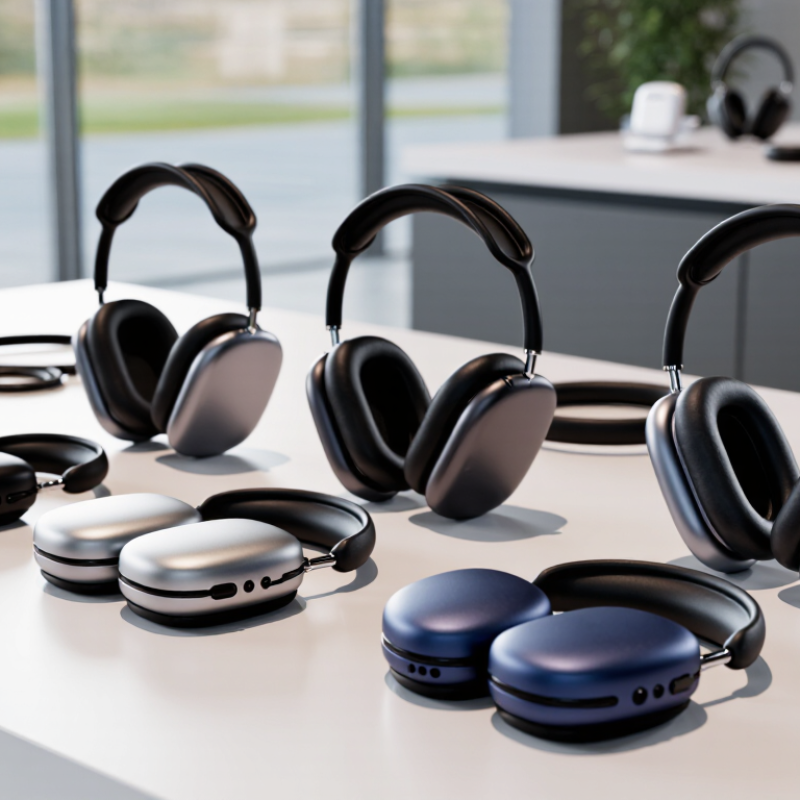
Understanding Active Noise Cancelling Headphone Suppliers in China
Understanding active noise cancelling headphone suppliers in China means looking beyond factory capacity. Many suppliers offer OEM or ODM production, but ANC performance depends on microphone placement, digital signal processing, acoustic tuning, and consistent assembly. A useful audit includes test reports across low-frequency noise, such as an air conditioner hum, and higher-frequency sounds, such as keyboard clicks. Ask how suppliers control microphone and driver variation between production batches. Ask for evidence. A polished prototype can still differ from mass production.
MarketsandMarkets’ 2023 Noise-Cancelling Headphones Market report estimated the market at US$13.1 billion and forecast US$21.5 billion by 2028, a projected annual growth rate of 10.4%. This points to demand, not guaranteed supplier quality. Buyers should review sample-test methods, battery performance, firmware update procedures, and defect-handling records. Request results from repeated tests, not one unusually good unit. That matters. It is also worth checking whether the supplier designs the ANC system in-house or relies on external modules; the latter may shorten development, but can limit tuning flexibility. Supplier documents are not always easy to compare, so unclear test conditions deserve follow-up.
China’s ANC Headphone Manufacturing Landscape
China’s ANC headphone manufacturing landscape is shaped by concentrated electronics supply chains, skilled assembly teams, and quick access to components. Manufacturers may source microphones, batteries, speaker drivers, and molded ear-cup parts within a relatively short logistics radius. That can speed up design changes. Small details matter. A slightly different ear-cup seal, for example, can affect comfort, bass response, and noise reduction.
Production capabilities vary. Some facilities use acoustic chambers and calibrated fixtures to compare samples, while others rely more heavily on manual checks. Buyers can ask how suppliers test ANC performance across different frequencies, verify battery consistency, and control defects between production lots. A polished sample is not proof of stable mass production. Still, this picture is uneven. Testing methods and reporting standards may differ from one factory to another, so results need careful interpretation.
ANC performance is only one part of a dependable product. Microphone placement, firmware tuning, hinge durability, and long-wear comfort also shape user experience. A factory visit or independent sample inspection can reveal issues that specification sheets miss, such as uneven button feel or loose cable joints. I would treat supplier claims as starting points, not conclusions. Noise reduction numbers alone rarely tell the full story.
Top Active Noise Cancelling Headphones Suppliers in China — China’s ANC Headphone Manufacturing Landscape
Standard octave-band center frequencies used in acoustic testing (Hz)
ANC performance is evaluated across frequency bands, since noise cancellation can vary by frequency. These are standard nominal octave-band center frequencies, not supplier-specific measurements or market-share figures; actual performance depends on headphone design, fit, and test conditions.
Types of Suppliers and Their Core Capabilities
China’s active noise-cancelling headphone suppliers generally fall into three groups: OEM factories, ODM developers, and specialist component makers. OEM factories focus on reliable assembly, production scale, and quality checks. ODM teams can develop the acoustic structure, circuit design, and firmware around a buyer’s requirements. Component specialists supply items such as microphones, drivers, and battery modules. Some suppliers combine these roles, but capabilities vary widely.
The Bluetooth SIG’s 2024 Market Update projects annual shipments of Bluetooth audio-streaming devices to reach about 1.5 billion by 2028. That growth raises the value of dependable testing and flexible production. Yet a large factory does not automatically mean strong ANC performance. Ask for frequency-response charts, microphone-array specifications, and sample test results. Small details matter. A loose ear cushion can weaken noise reduction, even when the electronics look impressive.
Tips: Request samples from the same production line proposed for your order. Test speech, steady fan noise, and sudden traffic sounds in person. Also confirm how the supplier handles firmware updates, component changes, and failed units. Audit records help, but they cannot replace listening tests. One limitation: supplier claims may use different test conditions, so comparisons are not always fair.
Leading Chinese Suppliers and Their Product Specialties
Chinese active-noise-cancelling headphone suppliers often specialize by production strength. Shenzhen manufacturers commonly offer compact designs, wireless tuning, and rapid sample revisions. Dongguan and Huizhou suppliers may focus more on acoustic assembly, molded housings, and high-volume production. Some factories develop hybrid ANC, combining feedforward and feedback microphones to reduce low-frequency noise such as cabin rumble. Others prioritize over-ear comfort, replaceable ear cushions, or long battery life. Small details matter. Ask for measured noise reduction across different frequencies, not just a single headline figure.
Grand View Research estimated the global headphones market at USD 35.3 billion in 2023 and forecast a 5.6% compound annual growth rate from 2024 to 2030. That wider market estimate is not specific to ANC models, but it signals sustained demand for varied product tiers. When comparing suppliers, request sample units, frequency-response curves, microphone tests, and battery results at stated volume levels. Check the microphones in a busy room. A polished demo can hide inconsistent performance. I would also verify whether the supplier controls acoustic design in-house or relies on outside partners; that distinction is easy to miss, and it can affect revision speed and quality consistency.
| Supplier Profile | Common Manufacturing Hub | Product Specialties | Typical ANC Configuration | OEM/ODM Capabilities | Buyer Checks |
|---|---|---|---|---|---|
| Over-ear headphone specialist | Shenzhen and Dongguan, Guangdong | Wireless over-ear headphones for travel, commuting, and everyday listening | Often configurable with feedforward, feedback, or hybrid ANC; performance depends on the complete design and fit | Housing and color options, ear-cushion materials, packaging, firmware customization, and private-label production | Request measured noise-reduction data, comfort samples, battery test results, and production quality-control criteria |
| True wireless stereo (TWS) specialist | Shenzhen and surrounding Pearl River Delta manufacturing areas | Compact in-ear wireless earbuds with charging cases and companion app options | ANC and transparency modes may be offered; microphone count, acoustic design, and chip platform vary by model | Earbud and case styling, app or control customization, packaging, and model-specific feature configuration | Check fit and seal, call quality, latency, charging-case capacity, Bluetooth compatibility, and applicable market certifications |
| Audio ODM with acoustic engineering capability | Guangdong electronics manufacturing cluster | Custom headphones developed around a buyer’s target price, design brief, and use case | ANC architecture is selected and tuned for the product; results should be verified on production-representative samples | Product design, acoustic tuning, prototyping, tooling coordination, firmware integration, and manufacturing | Clarify ownership of tooling and design files, engineering charges, sample revisions, and validation responsibilities |
| Private-label and export-focused supplier | Shenzhen, Dongguan, and nearby export-manufacturing locations | Ready-platform ANC headphones adapted for retail, e-commerce, or promotional programs | Usually based on an existing product platform, with available features varying by selected model | Logo application, color selection, packaging artwork, instruction manuals, and order-specific configuration | Confirm the exact model specification, component substitutions policy, lead time, warranty terms, and inspection method |
| Headset and communications-audio manufacturer | Guangdong, including established electronics production areas | Headsets designed for calls, office use, online meetings, or customer-support work | May combine environmental noise control with microphone noise reduction; these are separate functions and should be tested separately | Microphone and control options, connectivity configuration, fit adjustments, and customer-specific packaging | Test voice pickup in realistic noise, compatibility with intended devices, comfort during extended wear, and call controls |
| Components-to-finished-product supplier | Pearl River Delta supply chain, Guangdong | Finished headphones supported by access to local electronics, plastics, battery, and packaging suppliers | ANC capability depends on the selected acoustic components, electronics platform, firmware, and final tuning | Component sourcing, assembly, product customization, packaging coordination, and production ramp-up | Verify critical component specifications, supplier-change controls, incoming inspection, traceability, and batch consistency |
Profiles describe common supplier capabilities in China’s headphone manufacturing ecosystem, not rankings or verified claims about any specific company. Features, performance, certifications, and customization options vary by model and should be confirmed directly with the supplier.
How to Evaluate and Select an ANC Headphone Supplier
A capable ANC headphone supplier should prove performance with repeatable tests, not a polished product sample. Request frequency-response plots and noise-reduction results across low, middle, and high frequencies. Check fit consistency, microphone quality, battery life, call clarity, and performance with glasses or different ear shapes. Ask how firmware, components, and production settings are controlled between sample approval and mass production. A factory visit or independent inspection can reveal gaps that a sales presentation cannot.
Grand View Research’s 2024 market report estimated the global noise-cancelling headphones market at USD 13.05 billion in 2023, with projected growth through 2030. That signals opportunity, not supplier competence. Compare at least two production samples, then repeat key tests after a pilot run. Review defect records, lead-time history, minimum order quantities, and the supplier’s process for handling design changes. One caveat: test results can vary with ear fit and room conditions, so a single headline ANC figure may mislead.
FAQS
Ask for repeated test results across low and high frequencies. Compare performance against an air-conditioner hum and keyboard clicks. One polished sample is not enough.
Ask how the supplier controls microphone and driver differences between batches. Request samples from the proposed production line. The paperwork may look tidy, but real units can still vary.
OEM factories mainly assemble products and manage production checks. ODM teams may develop acoustic structures, circuits, and firmware. Component specialists supply parts such as microphones, drivers, and battery modules.
No. Factory size does not prove strong ANC performance. Ask for frequency-response charts and microphone specifications, then test the headphones yourself. Listen closely.
Try steady fan noise, spoken voices, and sudden traffic sounds. Also check whether keyboard clicks remain noticeable. One test cannot tell the whole story.
Ear-cup seals can change comfort, bass response, and noise reduction. Check hinge durability, button feel, and cable joints. Small parts matter.
Confirm how firmware updates work and how component changes are recorded. Ask what happens to failed units. I would want clear answers, though supplier documents can be hard to compare.
Request battery test results from repeated checks, along with defect-handling records. A factory visit or independent sample inspection may reveal issues that specification sheets miss. It takes extra effort.
Conclusion
China has developed a broad manufacturing ecosystem for Active Noise Cancelling Headphones, supported by experienced production teams, component suppliers, and established export capabilities. Suppliers vary in size and specialization: some focus on research and product design, while others excel at large-scale manufacturing, customization, or assembling complete products. Their capabilities may include acoustic engineering, wireless connectivity, battery integration, quality control, and packaging.
When comparing suppliers, buyers should look beyond product samples and assess technical expertise, production capacity, quality assurance processes, communication, customization options, and delivery reliability. It is also useful to clarify testing requirements, target price points, order quantities, and after-sales support before making a decision. A careful evaluation of these factors can help identify a supplier whose strengths match the product goals and commercial needs of the project.

Blog Tags: