2026 Top Open Ear Bluetooth Earbuds for Wholesale Buyers
Table of Contents
- What Open-Ear Bluetooth Earbuds Are and How They Work
- Common Designs and Audio Technologies in Open-Ear Earbuds
- Key Features Wholesale Buyers Should Evaluate in 2026
- Comparing Models by Comfort, Performance, and Use Case
- Wholesale Sourcing, Customization, and Compliance Considerations
- FAQS
- Conclusion
- Related Posts
Open-Ear Bluetooth Earbuds are moving from a specialist option to a visible category in personal audio. For wholesale buyers, that shift creates opportunity—and a few easy ways to misjudge demand. Bluetooth SIG’s 2024 Market Update projects more than 7.5 billion Bluetooth device shipments annually by 2028. That figure covers many product types, not earbuds alone, but it signals a broad, expanding connected-device ecosystem.
Fit matters. Open-ear designs leave the ear canal unobstructed, which can help users stay aware of nearby sounds. They do not guarantee hearing protection or clear calls in every setting. WHO estimated that 1.1 billion young people faced a risk of hearing loss from unsafe listening practices. In a WHO statement, Dr. Etienne Krug warned: “More and more young people are putting themselves at risk of hearing loss. They should be aware that once they have lost their hearing, it won’t come back.” Buyers should treat comfort and safe-use guidance as product considerations, not marketing decoration.
This guide compares leading 2026 options through practical wholesale criteria: stable Bluetooth performance, microphone clarity, battery life, wearing comfort, build quality, packaging, and supplier support. A sample should be tested on a noisy shop floor, during a phone call, and after several hours of wear. Small details matter. Specifications can look convincing on a product sheet; real-world performance may tell a less tidy story.
What Open-Ear Bluetooth Earbuds Are and How They Work
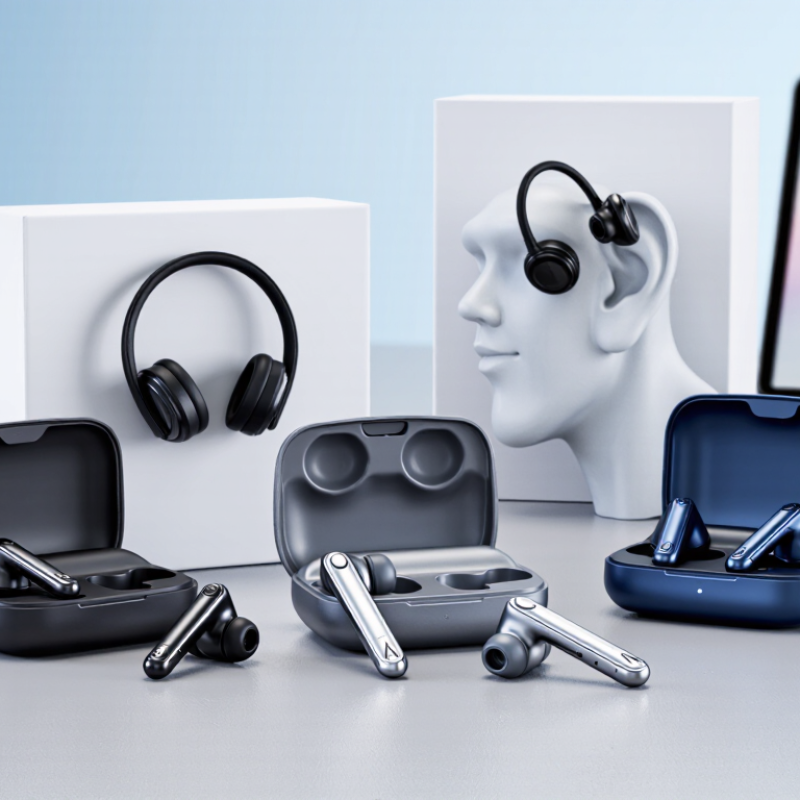
Open-ear Bluetooth earbuds let sound reach the ear without sealing the ear canal. Most models place small air-conduction drivers near the ear opening, often on a hook or clip. The driver vibrates a diaphragm, sending sound waves through the air into the ear. The ear stays open. Outdoors, users may still hear traffic or conversation, but awareness is never guaranteed. Some products use bone conduction instead, sending vibrations through the cheekbone, so buyers should not treat every open-ear design as alike.
Inside, a Bluetooth radio receives audio from a phone or laptop. A digital signal processor may adjust sound and reduce distortion. Microphones capture speech for calls, while fit, battery capacity, and wind handling affect daily use.
Open designs can leak sound in quiet rooms and struggle in noisy spaces. Small details matter: a loose hook may weaken bass, while glasses can press against it.
The Bluetooth SIG’s 2024 Market Update forecasts 7.5 billion annual Bluetooth device shipments by 2028 across all categories, not earbuds alone. This reflects a broad connected-device ecosystem, not proof of open-ear demand.
Wholesale samples should be tested at different volumes, while walking, and during calls. Fit still varies by ear.
Common Designs and Audio Technologies in Open-Ear Earbuds
Open-ear earbuds commonly use earhooks, clip-on frames, or slim neckbands. Earhooks wrap around the outer ear and can feel secure during walks or light exercise. Clip-on designs sit against the ear without entering the canal. Fit varies, though. A hinge that feels comfortable on one person may press awkwardly on another. Small details matter, such as rounded contact points and enough adjustment for different ear shapes.
Audio systems usually rely on air conduction or bone conduction. Air-conduction models aim sound toward the ear while leaving the canal open; bone-conduction models send vibrations through contact points near the cheekbones. Neither design blocks much surrounding noise, which is useful for awareness but can weaken bass in busy settings. Some models use directional speakers to reduce sound leakage, with mixed results at higher volumes. Microphone noise reduction can help calls outdoors, but wind still causes trouble. Bluetooth codec support, battery performance, and control placement also deserve hands-on checks. Wholesale buyers should compare samples across several listeners, not just inspect a specification sheet. A quiet showroom test is not enough. Try them on a pavement, too.
2026 Top Open-Ear Bluetooth Earbuds for Wholesale Buyers
Bluetooth audio codec maximum bitrates (kbps)
Codec support varies by earbud and source device. Higher bitrate does not automatically mean better sound; performance also depends on the implementation, connection conditions, and audio source. Wholesale buyers should verify compatible codecs for each model.
Reference specifications: Bluetooth A2DP SBC, Qualcomm aptX and aptX HD, and Sony LDAC. Values shown are maximum stated bitrates.
Key Features Wholesale Buyers Should Evaluate in 2026
For open-ear Bluetooth earbuds, comfort and secure placement deserve more than a quick showroom check. Ask suppliers for fit samples across different ear shapes, then test them during walking and light exercise. Fit varies. A frame that feels stable for five minutes may shift after an hour. Compare clamp pressure, contact points, and whether the earbuds stay in place without creating soreness. Sound leakage also matters: test speech and music in a quiet room, then at a moderate listening level. Buyers should review Bluetooth range, pairing consistency, microphone clarity, and reconnection after the case is opened.
Battery claims need context. Request test conditions, including volume level and whether calls or wireless features were used. Check charging time and case capacity, too. Small differences become noticeable in daily use. Ask for written quality-control procedures and sample inspection records, especially for hinge strength, button response, and charging contacts. Confirm the stated water-resistance rating is supported by test documentation rather than packaging language alone. For wholesale planning, compare packaging dimensions, accessory contents, and replacement-part availability. A supplier’s answers may sound polished; verify key details on production samples. Not every attractive specification predicts a comfortable, reliable product.
Comparing Models by Comfort, Performance, and Use Case
2026 Top Open Ear Bluetooth Earbuds for Wholesale Buyers
Comparing Models by Comfort, Performance, and Use Case
Open-ear earbuds suit buyers who need awareness of nearby sounds during walks, commuting, or desk work. For wholesale selection, compare fit, call clarity, battery life, and stability—not just driver size. Lightweight hooks can feel secure during movement, while clip-on designs may suit shoppers who dislike pressure inside the ear. Comfort varies by ear shape, though. A sample fitting session can reveal more than a specification sheet.
Performance depends on the setting. Test voice calls beside traffic, music in a quiet room, and Bluetooth stability through a typical office. Counterpoint Research reported that global true wireless stereo shipments grew 6% in 2024. That broader category trend does not prove equal demand for open-ear models, but it signals a competitive market where clear use-case positioning matters. Ask suppliers for repeatable battery and microphone test results. Small differences matter.
Tips: Request several samples before placing a bulk order. Check fit across different users, inspect hinge and charging-case durability, and compare advertised battery life with your own playback tests. Bluetooth SIG’s 2024 Market Update projected annual Bluetooth device shipments could reach 7.5 billion by 2028. Connectivity is becoming commonplace; reliable pairing still needs verification. One detail is easy to miss: open-ear designs usually offer less isolation, so they may disappoint buyers seeking strong bass or quiet listening.
Wholesale Sourcing, Customization, and Compliance Considerations
2026 Top Open Ear Bluetooth Earbuds for Wholesale Buyers
Wholesale sourcing starts with measurable specifications, not attractive sample packaging. IDC estimated 534.6 million wearable devices shipped worldwide in 2024. That figure covers many product types, not just earbuds, but signals a large and competitive category. Ask suppliers for consistent details: driver and microphone specifications, battery capacity, Bluetooth version, water-resistance test conditions, and production lead time. Then test several samples during walking, calls, and extended wear. Small details matter. An ear hook that feels secure in a showroom may press uncomfortably after an hour.
Customization can include colors, logos, packaging, and bundled accessories. More changes can mean more testing, longer lead times, and higher minimum orders. Request a pre-production sample and written approval for the final artwork. Also compare the sample with a unit from a pilot run; they may not match perfectly. That gap deserves attention. IDC’s shipment estimate is not proof of demand for any particular design, so use customer feedback and realistic sales forecasts before committing to large volumes.
Compliance needs to be checked for each sales destination. Confirm applicable radio approvals, labeling, battery documentation, and restricted-substance declarations with qualified testing partners. For Bluetooth products, verify that the supplier has completed the relevant Bluetooth SIG qualification process. For lithium batteries, request applicable transport test documentation, including UN 38.3 evidence where required. Keep reports tied to the exact model and component revisions. A certificate for a similar-looking product may not cover your order.
FAQS
Test samples on different ear shapes during walking and light exercise. Check pressure near the hooks and ears. Fit varies.
Check call clarity beside traffic, music in a quiet room, and Bluetooth reconnection after opening the case. Test real samples.
Ask for test conditions, including volume and call use. Compare playback time and charging time with your own tests. Details matter.
They help users stay aware of nearby sounds during walks or desk work. They offer less isolation and may provide less bass. Not for everyone.
Inspect hinges, buttons, and charging contacts. Request quality-control records and water-resistance test documents. Packaging claims alone are not enough.
Colors, packaging, and accessories may increase lead times or minimum orders. Approve a pre-production sample, then compare it with pilot-run units. They can differ.
Request several samples and check fit across users. Compare packaging size, included accessories, and replacement-part availability. I might still overvalue specifications.
Ask for model-specific product, battery, and destination-market documentation from qualified testing partners. Confirm it matches the exact model and components. Similar-looking units may differ.
Conclusion
Open-Ear Bluetooth Earbuds are designed to deliver wireless audio while leaving the ear canal uncovered, helping users stay aware of their surroundings. Common designs include ear-hook, clip-on, and frame-integrated styles, with technologies such as directional sound, Bluetooth connectivity, and built-in microphones. For wholesale buyers, evaluating comfort, fit stability, battery life, sound clarity, call quality, durability, and device compatibility can help identify products suited to different customers and everyday activities.
Comparing models by performance and intended use makes it easier to build a balanced product range, from lightweight options for commuting and work to more secure designs for exercise. Buyers should also consider sourcing reliability, minimum order quantities, customization options, packaging, quality-control processes, and applicable market requirements. A careful review of these factors can support informed purchasing decisions and help wholesalers select products that meet customer needs while offering consistent value.

Blog Tags: