China’s stainless steel drinkware industry is moving from basic utility toward engineered daily hydration. Stainless Steel Hydro Bottle manufacturers now compete on insulation, leak resistance, material traceability, and long-term usability. A bottle must survive crowded commuter bags, office desks, gym floors, and repeated dishwasher cycles.
Grand View Research reports that the global reusable water bottle market is expanding as consumers replace disposable packaging with durable products. Fortune Business Insights also identifies stainless steel as a major material segment, supported by demand for insulation and product longevity. However, market definitions vary between reports. That limitation matters. Some figures include plastic, glass, and premium flasks together.
“The best hydration strategy is the one people can maintain every day,” says Dr. Dana Cohen, a physician and co-author of Quench. Her point fits the manufacturing question. A technically impressive bottle still fails when its cap is uncomfortable, its seal becomes unreliable, or its weight discourages regular use.
Leading Stainless Steel Hydro Bottle manufacturers therefore examine more than polished surfaces. They test food-contact steel grades, vacuum insulation, weld quality, silicone seals, coating durability, and packaging efficiency. A 750-milliliter bottle may keep water cold through a summer commute, yet its environmental value depends on years of use.
This guide evaluates China’s leading manufacturers through practical evidence. It considers production experience, certification practices, customization capacity, quality control, and export reliability. No supplier is perfect. Even strong factories can show uneven finishing between batches. Readers should verify current audits, test reports, and sample performance before choosing a long-term partner.
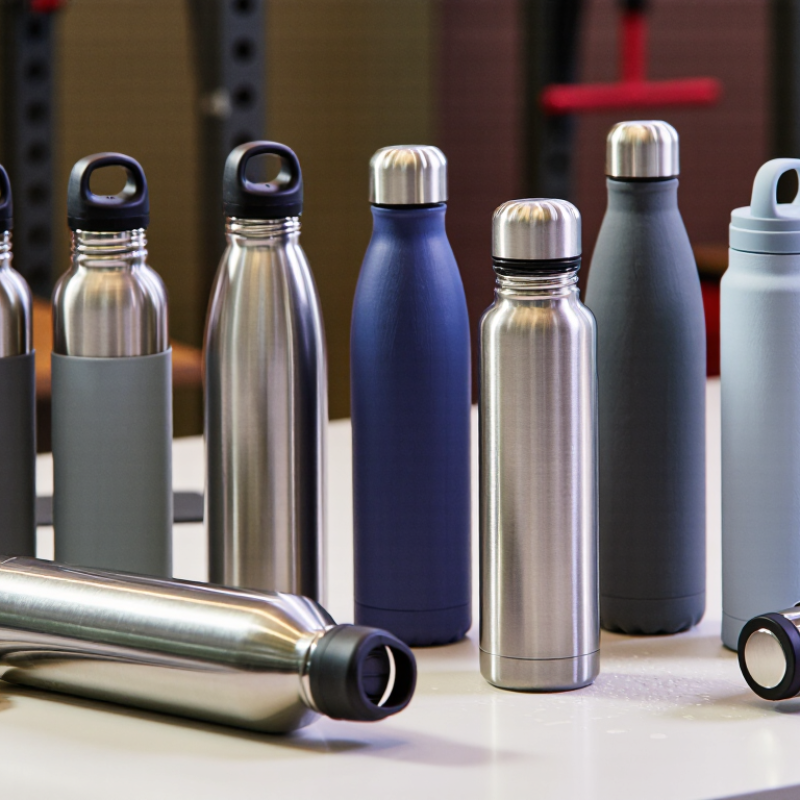
Stainless Steel Hydro Bottle Basics: 304 Grade, 18/8 Composition, and 316L Options
China Top Stainless Steel Hydro Bottle Manufacturers?
A reliable hydro bottle starts with the steel grade, not its surface finish. Grade 304 usually contains about 18% chromium and 8% nickel. That is why it is often called 18/8 stainless steel. It resists everyday water, coffee, and mild cleaning conditions. The Nickel Institute identifies 304 as a widely used food-contact stainless steel. World Stainless reported global crude stainless steel production of about 58.4 million tonnes in 2023. This scale supports broad material availability, but it does not guarantee consistent bottle quality.
Grade 316L adds molybdenum, commonly around 2–3%. This improves resistance to chlorides, salty drinks, and coastal humidity. Its low-carbon content can also reduce sensitization risks after welding. However, 316L is not automatically safer for every user. Poor welding, thin walls, or trapped residues still create problems. In factory inspections, weld smoothness and cap-thread cleaning deserve close attention. A polished interior may look impressive, yet surface testing and material certificates matter more.
Tips: Ask manufacturers for PMI testing, steel certificates, and wall-thickness records. Check whether “18/8” describes the full liquid-contact area. Review the gasket material separately. This detail is often missed. A practical test includes hot water, repeated washing, and a chloride-rich drink. Results may reveal weaknesses that catalog photographs hide.
China Top Stainless Steel Hydro Bottle Manufacturers? - Stainless Steel Hydro Bottle Basics: 304 Grade, 18/8 Composition, and 316L Options
| Evaluation Dimension | 304 Stainless Steel | 18/8 Stainless Steel | 316L Stainless Steel |
|---|---|---|---|
| Material designation | Austenitic stainless steel, commonly specified as UNS S30400. | A nominal composition description: approximately 18% chromium and 8% nickel. It is commonly associated with 304 stainless steel, but the term alone is not a complete material grade. | Low-carbon austenitic stainless steel, commonly specified as UNS S31603. |
| Typical chemical composition | Chromium: about 18–20%; nickel: about 8–10.5%. Exact limits depend on the applicable standard. | Nominally about 18% chromium and 8% nickel; actual certified limits should be verified against the material standard. | Chromium: about 16–18%; nickel: about 10–14%; molybdenum: about 2–3%; carbon: no more than 0.03% under common specifications. |
| Corrosion resistance | Good resistance for normal drinking water, beverages, and indoor everyday use. | Generally comparable to 304 when the underlying material is genuine 304-grade stainless steel. | Higher resistance to chlorides and pitting than 304 because of its molybdenum content; not completely corrosion-proof. |
| Suitability for bottle interiors | Widely suitable for reusable hydro bottles when properly formed, cleaned, and finished. | Suitable when supported by a material certificate confirming the actual stainless-steel grade. | Useful for demanding environments, salty beverages, coastal conditions, or users seeking additional chloride resistance. |
| Weldability and forming | Excellent formability and weldability; post-weld corrosion performance depends on process control and finishing. | Performance depends on the actual grade represented by the 18/8 description. | Good formability and weldability. The low-carbon formulation helps reduce sensitization risk after welding. |
| Typical density | Approximately 7.9–8.0 g/cm³. | Typically close to 304 when the material is an 18/8 austenitic stainless steel. | Approximately 8.0 g/cm³; the exact value varies slightly with composition and product condition. |
| Best-value positioning | Balanced cost, durability, appearance, and performance for most reusable bottle programs. | A useful purchasing description, but not a substitute for a recognized grade designation and test documentation. | Higher material cost, justified where improved chloride resistance or premium specifications are required. |
| Recommended verification before purchase | Request a material certificate, verify wall thickness, inspect welds and polishing, and confirm food-contact compliance for the target market. | Request the full grade, chemical analysis, heat or lot traceability, and evidence that “18/8” is not being used as an unverified marketing label. | Request a certificate confirming 316L chemistry, especially molybdenum and carbon limits, and evaluate whether the added cost matches the intended application. |
Note: Chemical ranges and designations can vary slightly by governing standard and product form. Always confirm the applicable specification and material certificate for production orders.
FAQS
304 stainless steel usually contains about 18% chromium and 8% nickel. It suits water, coffee, and mild cleaning conditions. This is common, not perfect.
Not necessarily. Ask whether 18/8 covers every liquid-contact surface. Check the lid, welding areas, and inner base separately.
316L contains molybdenum, often around 2–3%. It handles salty drinks, chlorides, and coastal humidity better. It still needs proper welding and cleaning.
No. Thin walls, rough welds, or trapped residue can still cause problems. Material grade alone cannot prove overall quality.
Request current steel certificates, factory certificates, and product test reports. Check the issuer, testing scope, and expiry date. Copied certificates deserve careful review.
Ask for heat numbers, mill certificates, invoices, and production-batch links. Choose one carton and trace it back to its original steel heat number. It sounds simple. Gaps often appear.
Useful checks include wall thickness, leak testing, vacuum retention, weld inspection, and thermal performance. Ask for test methods, sample sizes, acceptance limits, and failed-batch records. Photos cannot show everything.
Yes. Review its material, contact suitability, and cleaning performance separately. Test the complete bottle with hot water, repeated washing, and a salty drink. The gasket is easy to overlook.
Conclusion
Choosing the right Stainless Steel Hydro Bottle manufacturer requires more than comparing prices. Buyers should understand the differences between 304 stainless steel, 18/8 composition, and higher-corrosion-resistant 316L options. Reliable factories typically operate under ISO 9001 quality systems and can provide FDA- and LFGB-related compliance documentation where applicable. They should also perform complete leak testing and maintain clear quality-control procedures.
Factory evaluation should include minimum order quantities, production capacity exceeding 10,000 units, realistic lead times, and the ability to support customized designs, packaging, and OEM requirements. Vacuum insulation performance is another key consideration, with dependable bottles commonly targeting 12–24 hours of thermal retention while achieving consistent sealing results. Before selecting a supplier, request material traceability records, certification copies, inspection reports, quality data, and evidence of successful export experience. A transparent manufacturer with strong documentation and repeatable production controls can help ensure reliable performance, consistent quality, and smoother long-term cooperation.