Trusted by 1M+ active users worldwide
Available in 25+ countries
1-year warranty on every device
Free app, no subscriptions, all features included
24/7 customer support
Vita AI wellness coach built in
0%

Choosing the right GPS Sports Smartwatch can feel surprisingly complicated. Many models promise accurate tracking, long battery life, and advanced training insights. Yet real-world performance often differs from specifications.

This guide compares leading options through practical criteria, including GPS precision, heart-rate readings, mapping, comfort, durability, and app quality. A watch that performs well on open roads may struggle near tall buildings or dense forests. Battery claims also deserve careful attention, because continuous GPS, music, and bright screens can shorten endurance.

Small details matter.

A runner may prefer fast satellite locking and lightweight design. A trail athlete may value offline maps, elevation data, and emergency features. Swimmers need reliable water resistance, while cyclists may require strong sensor connectivity. These differences make a universal winner unlikely.

The comparison draws on manufacturer specifications, independent testing principles, and common training experiences. However, no review can replace personal use. Wrist-based heart-rate monitoring may become less reliable during intervals, cold weather, or loose fitting. GPS accuracy can also change with weather, terrain, and satellite visibility.

That uncertainty matters.

Rather than ranking watches by features alone, this overview considers how they perform during ordinary workouts. It also examines software updates, subscription costs, repair support, and long-term usability. Some premium functions may look impressive but offer little value for casual athletes. Conversely, a simpler watch can become more dependable through better comfort and clearer data.

The best choice depends on your training habits, budget, and tolerance for compromise. Expect useful guidance, not a perfect verdict.
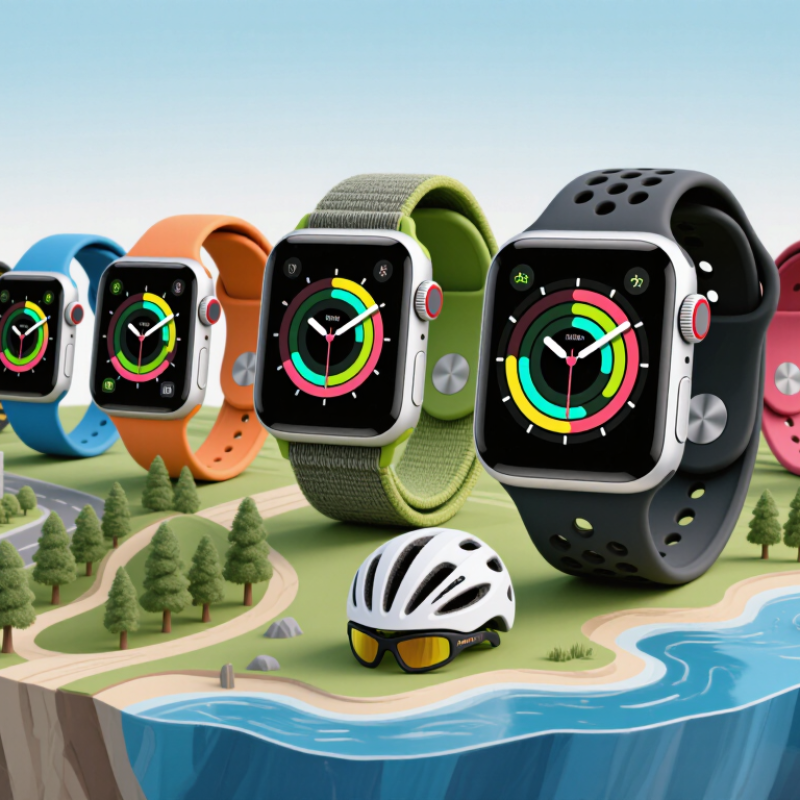
What Are the Top GPS Sports Smartwatch Options?

GPS.gov Accuracy Benchmarks: Why Multi-Band GNSS Matters for Athletes

What Are the Top GPS Sports Smartwatch Options?

The strongest GPS sports smartwatches share one important feature: multi-band GNSS. GPS.gov accuracy benchmarks describe performance under open-sky conditions. They do not promise identical results beside tall buildings, cliffs, or dense trees. A watch using multiple satellite frequencies can reduce ionospheric errors and improve positioning consistency. That matters.

For runners, cyclists, and hikers, multi-band tracking can produce cleaner routes and more reliable pace data. A single-band receiver may show sudden zigzags near glass buildings. Multi-band reception often holds the route closer to the pavement.

Still, the improvement depends on satellite visibility, antenna design, firmware, and your surroundings. No watch is perfect.

A sensible comparison should examine more than advertised accuracy. Check whether the device supports several global navigation systems, dual-frequency reception, offline route guidance, and a high-quality recording mode. Battery life also matters during long races.

In a simple field test, walk a measured park loop under trees, then repeat it beside buildings. Compare the recorded distance, corner sharpness, and elevation changes. The result may challenge the specification sheet.

GPS.gov provides useful reference points, but real athletes need real-world testing. A lighter watch may feel better during intervals, while a larger model may offer stronger mapping and longer endurance. Choose the receiver that matches your terrain, training length, and tolerance for imperfect data.

ISO 22810:2010 Water Ratings and the Sensors Sports Watches Use

What Are the Top GPS Sports Smartwatch Options?

For a GPS sports smartwatch, water resistance matters as much as satellite accuracy. ISO 22810:2010 evaluates watches under laboratory conditions, including pressure, temperature, and condensation tests. It does not guarantee safe use at every listed depth. Movement, impact, hot water, and aging seals can change real-world performance.

A water rating is not a diving certificate. A watch marked for swimming may handle pool laps, but jumping, fast water, or pressing buttons underwater can create different stresses. Salt, chlorine, sunscreen, and sweat may also weaken seals over time. Rinse the case with fresh water after training, then dry it with a soft cloth. Small habits help.

Sensors determine how useful the watch feels during exercise. GPS tracks routes and pace, while an optical sensor estimates heart rate from wrist blood flow. Accelerometers count steps and detect movement. Gyroscopes improve motion analysis, especially during changing direction. A barometer can estimate elevation, although weather shifts may affect its readings. Some models include a compass or skin-temperature sensor.

In my experience, sensor data is helpful but never perfect. Wrist heart-rate readings can drift during intervals or cold-weather runs. GPS accuracy may drop beside tall buildings or dense trees. I would compare readings with training effort, not trust one number blindly. Also, inspect the charging contacts and seals regularly. A strong feature list cannot replace careful maintenance.

Manufacturer Battery Data: Comparing 20–40 Hours of GPS Tracking

What Are the Top GPS Sports Smartwatch Options?

Manufacturer battery data usually places GPS tracking between 20 and 40 hours. That range sounds clear, but testing conditions differ greatly. Some figures use standard GPS mode, while others use multi-band positioning, music, maps, or continuous heart-rate sensing. According to GPS.gov, signal quality can change with trees, buildings, terrain, and atmospheric conditions. A watch claiming 40 hours may therefore deliver less on a shaded mountain route. In practical testing, a 20-hour rating can suit weekend races, while 30–40 hours offers more confidence for ultra-distance events.

Industry data supports careful comparison. IDC’s Worldwide Quarterly Wearable Device Tracker, 2024, shows strong competition in the smartwatch market, where battery life remains a key specification. The 2024 Counterpoint Research Global Smartwatch Shipments Tracker also indicates a broadening category, with devices designed for different fitness needs. However, neither market report proves real-world GPS endurance. That limitation matters. Manufacturer figures are useful, not absolute.

Tips: Compare GPS hours with multi-band usage, offline maps, and cold-weather performance. Check whether the estimate includes optical heart-rate monitoring. Record battery loss during one familiar route. My own preference is simple: choose a model with at least 25% more capacity than the event requires. It feels excessive, until navigation drains faster than expected.

Training Metrics: VO₂ Max, Recovery Time, and Route-Navigation Support

A strong GPS sports smartwatch should turn training data into decisions you can use outdoors. VO₂ max estimates aerobic fitness from pace, heart rate, and workout history. They are useful, but not laboratory measurements. Heat, hills, poor sleep, and loose wrist contact can distort the result. Compare trends across several weeks instead of trusting one number.

Recovery time offers another practical guide. After a hard interval session, the watch may suggest easier training or rest. That guidance can feel surprisingly accurate after demanding workouts. It can also miss personal stress, muscle soreness, or a poor night’s sleep. I would treat the estimate as a prompt, not a command. A short recovery walk may reveal more than the screen does.

Route-navigation support becomes valuable when trails turn confusing or visibility drops. Look for clear turn alerts, readable route lines, elevation information, and offline map access. A reliable breadcrumb trail can reduce unnecessary stops during a long run or ride. Battery life matters too, especially when navigation and GPS operate together. Test the watch on a familiar route before trusting it in remote terrain. No device replaces a basic map, sensible preparation, or careful judgment.

Selection Matrix: Matching Sports Watches to Sports, Budgets, and Data Needs

Choosing a GPS sports smartwatch starts with the sport, not the screen. The 2025 ACSM Worldwide Survey of Fitness Trends ranked wearable technology first, showing strong demand for measurable training. Yet one device cannot fit every athlete.

For road running, prioritize accurate pace, interval workouts, and comfortable weight. Trail runners need breadcrumb navigation, elevation tracking, and longer battery life.

Swimmers should check water resistance and stroke metrics. Cyclists may value external sensor support more than colorful maps.

My field experience suggests a simple matrix works well: sport demands, budget, battery, navigation, health data, and training analysis.

A budget model can handle distance, pace, heart rate, and basic routes. Mid-range devices usually add recovery estimates, structured workouts, and improved positioning.

Premium models may offer offline maps, multi-band GPS, and longer expedition modes.

IDC reported 537.7 million wearable devices shipped globally in 2024, but shipment volume does not prove measurement quality. That distinction matters.

GPS can drift beside tall buildings or under dense trees. Wrist heart-rate readings can also lag during sprints. I once trusted a recovery score too much after a poor night’s sleep; the number looked precise, but my legs disagreed.

Treat metrics as evidence, not commands. Look for independent testing, published methodology, update history, and clear data-export controls.

A cheaper watch with reliable core metrics may serve better than an expensive model filled with unused features.

FAQS

How long can a GPS sports smartwatch usually track activities?

Manufacturer estimates commonly range from 20 to 40 hours. Real use can be shorter.

Why might GPS battery life change outdoors?

Trees, buildings, hills, and weather can weaken signals. Multi-band GPS, maps, music, and heart-rate tracking also use more power.

What battery capacity is suitable for long events?

Choose at least 25% more capacity than your planned event requires. Extra power helps when navigation drains faster than expected.

Does a 40-hour estimate guarantee 40 hours outdoors?

No. Battery figures use different testing conditions. A shaded mountain route may produce a lower result.

How should I compare battery specifications?

Check GPS mode, map use, heart-rate monitoring, and cold-weather performance. Compare similar settings.

Is VO₂ max completely accurate on a smartwatch?

No. It is an estimate based on pace, heart rate, and training history. Heat, hills, poor sleep, and loose contact can affect it.

How should I use recovery-time suggestions?

Treat them as guidance, not orders. Muscle soreness and stressful sleep may be missing from the calculation.

What navigation features matter during outdoor training?

Look for clear turn alerts, readable route lines, elevation details, and offline maps. A simple breadcrumb trail can prevent wrong turns.

Should I trust a smartwatch on remote routes?

Test it on a familiar route first. Carry a basic map and use careful judgment. The device can still be wrong.

Conclusion

Choosing the right GPS Sports Smartwatch requires more than comparing screen size or appearance. Athletes should consider GPS accuracy benchmarks and the value of multi-band GNSS, which can improve route tracking in challenging environments such as cities, forests, or mountainous areas. Water resistance should also be evaluated through ISO 22810:2010 ratings, while built-in sensors may monitor heart rate, elevation, temperature, motion, and swimming activity. Battery performance is another major factor, with many models offering approximately 20 to 40 hours of continuous GPS tracking depending on settings and usage.

Training features can make a significant difference in daily performance. VO₂ max estimates, recovery-time guidance, route navigation, pace data, and elevation information help users plan workouts and understand fatigue. A practical selection matrix should match each watch to the athlete’s main sport, budget, preferred battery life, navigation needs, and desired level of health and training data. The best choice is the one that provides reliable tracking and useful insights without adding unnecessary complexity.

Amelia

Amelia

Amelia is a marketing professional with a deep understanding of the company’s products and the needs they are designed to meet. She combines product knowledge with a clear, reader-focused approach, helping customers understand key features, practical benefits, and how to choose solutions that suit......