Trusted by 1M+ active users worldwide
Available in 25+ countries
1-year warranty on every device
Free app, no subscriptions, all features included
24/7 customer support
Vita AI wellness coach built in
0%

A Portable Waterproof Speaker is a compact audio device designed for listening in places where ordinary speakers may struggle. It combines wireless playback, rechargeable power, and protection against water exposure. You might use one beside a pool, on a damp balcony, or during a weekend hike. Its small body can still produce surprisingly full sound.

Water resistance is not a simple yes-or-no feature. Manufacturers usually describe protection through an IP rating, such as IPX7 or IP67. The first example indicates temporary immersion protection, while the second also includes dust resistance. However, ratings differ by model and testing conditions. Always check the official specifications before placing a speaker near water. A shower-friendly speaker may not survive saltwater, deep immersion, or repeated drops.

Practical details matter as much as technical labels. Look for sealed charging ports, a secure handle, physical buttons, and a battery that fits your routine. A speaker with ten hours of advertised playback may provide less at high volume. That is easy to overlook. Sound quality also depends on room size, listening distance, and placement. On a wet stone surface, bass may sound stronger but less clear. In my view, the best Portable Waterproof Speaker is not always the loudest model. It should balance durability, sound, battery life, and safe everyday handling. No device is completely indestructible. A little caution still helps.
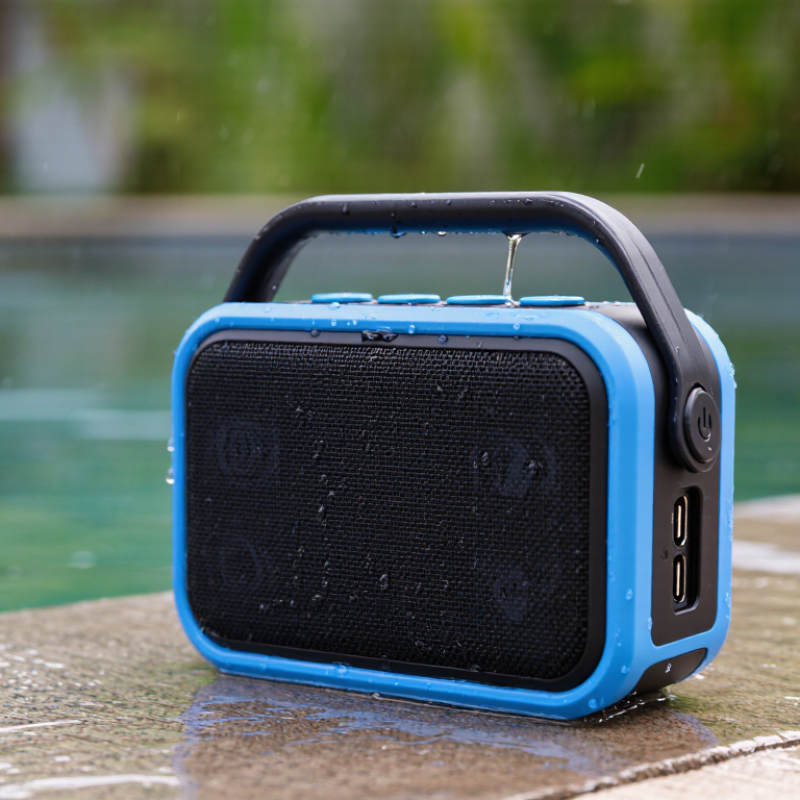
What Is a Portable Waterproof Speaker?

Definition and Core Features of a Portable Waterproof Speaker

What Is a Portable Waterproof Speaker?

A portable waterproof speaker is a compact audio device designed for movement and exposure to water. It usually combines a rechargeable battery, wireless connectivity, amplified drivers, and a sealed outer shell. The word “waterproof” needs careful interpretation. An IP rating explains resistance to dust and water, while its final digit indicates water protection. A higher rating does not make every component invincible.

Core features include a grippy exterior, physical controls, stable wireless pairing, and enough battery capacity for several hours of listening. A sealed charging cover helps protect sensitive ports. Some designs use passive radiators to create stronger bass without adding much size.

During outdoor use, I check whether buttons remain usable with wet fingers. That small detail matters. A speaker that sounds excellent but slips easily may be poorly suited to beaches, kitchens, or poolside tables.

Sound quality still depends on driver size, enclosure design, and volume level. Waterproof seals can slightly limit acoustic performance, especially in very small models. This is where specifications can mislead. IPX7 protection, for example, generally describes temporary immersion under controlled testing, not careless diving or repeated neglect.

No enclosure solves every problem. Rinse away salt or chlorine, dry the speaker fully, and close the charging cover before use. I would also avoid charging it while moisture remains inside, even when the exterior appears dry.

How Waterproof Protection Works in Portable Speakers

What Is a Portable Waterproof Speaker?

A portable waterproof speaker uses sealed housing to resist water entering sensitive electronics. Its enclosure usually includes rubber gaskets around the battery compartment and control buttons. Charging ports may have tight silicone covers. These parts block splashes, rain, and brief submersion when properly closed.

Waterproof protection is often described through an IP rating. The first number measures dust protection, while the second measures water resistance. For example, a higher water number can indicate protection against powerful spray or temporary immersion. However, testing happens under controlled conditions. Real use involves drops, aging seals, sand, soap, and changing water pressure.

Small details matter. A loose port cover can weaken protection quickly. Saltwater may leave residue that damages seals and metal contacts. After exposure, rinse the speaker with fresh water, wipe it carefully, and let it dry before charging. Never force water into openings, even when the rating looks strong. Manufacturers may not cover damage from misuse, wear, or unapproved repairs.

Water resistance is not permanent. Rubber can harden, tear, or collect grit over time. A speaker that survives a poolside splash may fail after repeated beach trips. Checking the rating, inspecting covers, and following the care instructions provide more reliable protection than trusting the word “waterproof” alone. The label helps, but it is not a promise against every accident.

Key Components and Audio Performance

What Is a Portable Waterproof Speaker?

Key Components and Audio Performance

A portable waterproof speaker combines drivers, an amplifier, a battery, wireless circuitry, and a sealed enclosure. Its protection rating matters. Under IEC 60529, IPX7 allows immersion in one metre of water for up to 30 minutes. However, IPX7 does not confirm dust protection. A speaker needs a separate rating for that.

The enclosure often uses passive radiators to improve bass without open ports. Sealed grilles and waterproof membranes protect the drivers, but they can slightly reduce high-frequency detail. A larger driver usually produces fuller sound. Still, wattage alone can mislead buyers. Maximum output, distortion, frequency response, and off-axis clarity reveal more. Bluetooth SIG’s 2024 Market Update estimated 5.4 billion Bluetooth-enabled products shipped in 2023, showing how widely wireless audio has spread. Yet connection quality still depends on antenna design, codec support, and nearby interference. My practical tests often reveal an awkward truth: a compact speaker may sound powerful outdoors but thin indoors. Room reflections change everything.

Tips: Check the IP rating, not vague “water-resistant” wording. Test speech clarity at low volume. Inspect the charging cover carefully. A loose seal can ruin waterproof performance. Compare battery claims at realistic volume, because laboratory figures often use quieter settings. A speaker can be rugged and imperfect. That is normal.

Battery Life, Connectivity, and Portability

What Is a Portable Waterproof Speaker?

A portable waterproof speaker combines a rechargeable battery, wireless connectivity, and protection against water exposure. The phrase “waterproof” can mislead. An IPX7 rating usually means temporary immersion up to one meter, but saltwater, sand, and charging ports still create risks. The International Electrotechnical Commission’s IEC 60529 standard defines these protection levels, giving buyers a clearer comparison method.

Battery life shapes real outdoor use. Grand View Research reported continued growth in the portable Bluetooth speaker market, driven partly by demand for longer playback and mobile listening. In practice, a speaker rated for 12 hours may deliver less at high volume, cold temperatures, or maximum bass. I would test it beside a pool, not only in a quiet room. Ten minutes of charging can also matter during a short picnic. Small details matter.

Connectivity should feel predictable. The Bluetooth Special Interest Group’s 2024 market update projected billions of Bluetooth device shipments annually through 2028, showing how common this connection has become. Look for stable pairing, useful range, and clear reconnection after a phone leaves the room. Newer Bluetooth features may improve efficiency and shared audio, but compatibility remains uneven. That is the uncomfortable part. A technically advanced speaker can still frustrate users when an older phone behaves differently. Portability depends on more than weight: a secure handle, sealed buttons, and a charging cover often matter more than a tiny size.

What Is a Portable Waterproof Speaker? - Battery Life, Connectivity, and Portability
Data Dimension Typical Specification or Range What It Means Practical Consideration
Waterproof Rating IPX5 to IPX7 IPX5 protects against water jets, while IPX7 allows temporary immersion in up to 1 meter of water for approximately 30 minutes under laboratory conditions. Check the exact rating before using the speaker near a pool, in the shower, or outdoors during heavy rain.
Battery Life Approximately 6–24 hours per charge Playback time depends on battery capacity, volume level, wireless features, lighting, and equalizer settings. Higher volume generally reduces the actual operating time compared with the manufacturer's stated figure.
Charging Time Approximately 2–5 hours The time required to recharge the internal lithium-ion battery from empty to full. USB-C charging is common and may allow the speaker to be charged from a wall adapter, laptop, or power bank.
Wireless Connectivity Bluetooth wireless connection; typical range up to 10–30 meters in open space Bluetooth allows a phone, tablet, or computer to stream audio without a physical audio cable. Walls, metal objects, crowded wireless environments, and the connected device can reduce the usable range.
Additional Connection Options USB-C charging; some models include a 3.5 mm audio input or USB playback Wired inputs can provide an alternative when wireless audio is unavailable or when lower wireless interference is preferred. A charging port is not automatically an audio input; verify the function of each port.
Speakerphone Function Available on many portable models A built-in microphone can support hands-free calls when the speaker is connected to a compatible phone. Call quality depends on microphone placement, background noise, and the distance between the user and the speaker.
Weight Approximately 0.2–2.5 kg Weight varies according to battery size, enclosure materials, drivers, passive radiators, and protective construction. Light models are easier to carry, while heavier models may provide stronger bass and longer battery capacity.
Physical Size Commonly 10–30 cm in length or diameter Portable speakers range from compact models that fit in a bag to larger units designed for outdoor gatherings. Measure the storage space in a backpack, bicycle basket, or travel case before purchasing.
Carrying Features Integrated handle, strap loop, or detachable carrying strap These features make it easier to transport or attach the speaker to a bag or suitable outdoor equipment. A strap or loop is not necessarily designed for climbing or load-bearing safety applications.
Audio Output Approximately 3–30 watts RMS for common portable designs Output power indicates the speaker's ability to produce sound, but it does not alone determine loudness or sound quality. Room size, speaker efficiency, enclosure design, and distortion control also affect perceived volume.
Sound Coverage Personal listening to small-room or small-outdoor-area coverage Compact speakers are generally suitable for desks, bedrooms, kitchens, picnics, and small social settings. Open outdoor spaces usually require more acoustic output because sound disperses more quickly.
Durability Features Rubberized edges, sealed controls, impact-resistant enclosure, and corrosion-resistant grille Protective construction helps the speaker withstand everyday handling and exposure to dust or moisture. Water resistance does not guarantee protection from sand, saltwater, drops, or prolonged submersion unless specifically stated.
Multi-Speaker Pairing Supported by some models using a compatible pairing mode Two compatible speakers may be linked for wider stereo separation or increased coverage. Both speakers usually need to support the same pairing system and may need to be from the same product series.
Typical Use Environments Home, travel, camping, beach areas, poolside locations, and outdoor gatherings A portable waterproof speaker is designed to combine wireless audio playback with resistance to moisture and easy transport. Rinse off salt, chlorine, or sand when appropriate and keep charging ports closed and dry before charging.

Choosing and Using a Portable Waterproof Speaker

A portable waterproof speaker combines a wireless connection, built-in battery, and water-resistant housing. Its portability matters when a speaker moves from a kitchen counter to a wet campsite. Bluetooth SIG’s 2024 Market Update reports 5.4 billion Bluetooth device shipments in 2023. That scale supports broad compatibility, but connection quality still varies between phones and speaker designs.

Choosing the right model starts with the IP rating. IEC 60529 defines IPX7 as protection during temporary immersion up to one metre for 30 minutes. IPX5 protects against water jets, but not full immersion. Do not treat both ratings as identical.

Check battery capacity, charging-port protection, button visibility, and weight. A smaller unit fits a bicycle basket better. A larger enclosure usually delivers stronger bass. I still prefer a clear control layout over extra sound modes.

Use the speaker carefully. Rinse off sand or salt with fresh water, then let the housing dry completely. Never charge it while the port is damp. Keep the volume moderate near reflective walls, because distortion can appear quickly. Bluetooth SIG expects annual Bluetooth shipments to reach 7.5 billion units by 2028, yet wireless convenience can encourage careless pairing. Remove unknown devices from the connection list. Water resistance is not damage immunity. A drop, cracked seal, or blocked drain can reduce protection, even when the specification looks reassuring.

FAQS

How does a portable waterproof speaker keep water away from its electronics?

Sealed housing, rubber gaskets, and silicone port covers block splashes and limited immersion. Small covers matter.

What does an IP rating tell me?

The first number shows dust protection. The second number shows water resistance. Higher water ratings usually indicate stronger protection.

Is an IPX7 speaker safe for every wet situation?

No. IPX7 generally covers temporary immersion up to one metre for about 30 minutes. Saltwater, sand, and pressure can still cause damage.

Can I charge the speaker immediately after using it near water?

Do not charge it while the port is damp. Rinse away salt or sand, wipe the housing, and let it dry completely.

How long will the battery really last outdoors?

A listed 12-hour battery may last less at high volume, strong bass, or cold temperatures. Real conditions are less forgiving.

What should I check before buying a portable waterproof speaker?

Check the IP rating, battery capacity, charging cover, button layout, weight, and carrying handle. A tiny body is not always better.

Will wireless pairing work reliably with every phone?

Compatibility is usually broad, but connection behavior can vary. Older phones may reconnect slowly or handle newer features poorly. That frustration is real.

How should I clean the speaker after a beach trip?

Rinse it with fresh water, remove visible grit, and dry it before charging. Never force water into openings.

Does waterproof protection last forever?

No. Rubber seals can harden, tear, or collect grit. Repeated beach use may weaken protection faster than occasional poolside splashes.

Can waterproof protection prevent damage from drops?

No. A cracked seal, blocked drain, or damaged cover can reduce water resistance. The rating is useful, but it is not a promise against accidents.

Conclusion

A Portable Waterproof Speaker is a compact audio device designed to deliver clear sound while resisting water exposure during outdoor activities, travel, or everyday use. Its waterproof protection usually comes from sealed housing, covered ports, water-resistant materials, and carefully designed controls that help prevent moisture from reaching sensitive internal components. However, waterproof ratings can vary, so users should understand the level of protection before placing the speaker near water.

Inside, the speaker combines drivers, an amplifier, and acoustic components to produce balanced audio in a small body. Battery capacity affects listening time, while wireless connectivity makes pairing with phones and other devices convenient. Lightweight construction, a secure grip, and practical controls also improve portability. When choosing a Portable Waterproof Speaker, consider sound quality, protection level, battery life, connection stability, size, and charging options. Proper use includes keeping covers closed, avoiding unnecessary submersion, and allowing the device to dry completely before charging.

Elowen

Elowen

Elowen is a marketing professional with a deep understanding of the company’s products, their practical applications, and the needs of the people who use them. With a thoughtful, research-led approach, Elowen turns product knowledge into clear, useful information that helps readers make confident......